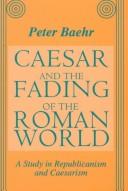
Caesar and the Fading of the Roman World
0
0
As an Amazon Associate and affiliate partner, Menrva Books earns from qualifying purchases. Learn more
Author Description
For many centuries, Julius Caesar was a name that evoked strong feelings among educated people. Some of these responses were complimentary, but others came from the point of view of "political republicanism" - which envisaged Caesar as a historical symbol for some of the most dangerous tendencies a polity could experience. Caesar represented everything that republicans detested - corruption, demagogy, usurpation - and as such, provided an anti-model against which genuine political virtue could be measured. Caesar and the Fading of the Roman World examines the reception of Caesar in republican thought until the late eighteenth century and his transformation in the nineteenth, when he enjoyed a major rehabilitation in the literary culture and historiography of the day. In the nineteenth century, Caesar enjoyed a major rehabilitation; from being a pariah, he was elevated in the writings of people like Byron, De Quincey, Mommsen, Froude, and Nietzsche to the greatest statesman of his age. Simultaneously, Caesar's name continued to function as a term of polemic in the emergence of a new debate on what came to be called "Caesarism." While the metamorphosis of Caesar's reputation is studied here as a process in its own right, it is also meant to highlight the increasing enfeeblement of the republican tradition. The transformation of Caesar's image is a sure sign of changes within the wider present-day political culture and evidence of the emergence of new problems and challenges. This volume is an important study that will be of value to sociologists, political theorists, and historians.
Menrva's Summary
THE THESIS
This book investigates the evolving perception of Julius Caesar from a symbol of political corruption to a celebrated statesman. The work traces Caesar's reception in republican thought up to the late eighteenth century, detailing how he was viewed as an anti-model representing demagogy and usurpation. It then examines his significant rehabilitation in nineteenth-century literary culture and historiography, where figures like Byron, Mommsen, and Nietzsche elevated him to the status of a great statesman. The study also analyzes the concurrent emergence of the term "Caesarism" and its polemical use, linking these shifts in reputation to the decline of the republican tradition and the changing political landscape.
THE SCOPE MAP
- Reception of Julius Caesar in republican thought until the late eighteenth century.
- Caesar's transformation and rehabilitation in nineteenth-century literary culture and historiography.
- Analysis of figures like Byron, De Quincey, Mommsen, Froude, and Nietzsche in Caesar's reevaluation.
- The function of Caesar's name in the debate on "Caesarism."
- The study highlights the enfeeblement of the republican tradition through the lens of Caesar's changing image.
- Connects the metamorphosis of Caesar's image to broader changes in political culture and emerging challenges.
THE AUTHORITY PERSPECTIVE
This volume is presented as an important study for sociologists, political theorists, and historians. The description suggests a scholarly examination of historical reception and its connection to evolving political thought. The book appears to offer a nuanced perspective on how historical figures are reinterpreted over time and how these reinterpretations reflect broader societal and political shifts. Its focus on the decline of republicanism and the rise of 'Caesarism' indicates a deep engagement with political theory and historical analysis.
Page Count:
359
Publication Date:
1998-01-01
ISBN-10:
1560003049
ISBN-13:
9781560003045
Science
History
Biography
Non-Fiction
Community Tags
Similar Books














