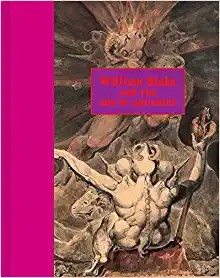
William Blake and the Age of Aquarius
0
0
As an Amazon Associate and affiliate partner, Menrva Books earns from qualifying purchases. Learn more
Author Description
A stunningly illustrated look at how Blake's radical vision influenced artists of the Beat generation and 1960s counterculture In his own lifetime, William Blake (1757-1827) was a relatively unknown nonconventional artist with a strong political bent. William Blake and the Age of Aquarius is a beautifully illustrated look at how, some two hundred years after his birth, the antiestablishment values embodied in Blake's art and poetry became a model for artists of the American counterculture. This book provides new insights into the politics and protests of Blake's own lifetime, and the generation of artists who revived and reimagined his work in the mid-1940s through 1970, or what might be called the 'long sixties.' Contributors explore Blake's outsider status in Georgian England and how his individualistic vision spoke to members of the Beat Generation, hippies, radical poets and writers, and other voices of the counterculture.0Among the artists, musicians, and writers who looked to Blake were such diverse figures as Diane Arbus, Jay DeFeo, the Doors, Sam Francis, Allen Ginsberg, Jess, Agnes Martin, Ad Reinhardt, Charles Seliger, Maurice Sendak, Robert Smithson, Clyfford Still, and many others.00Exhibition: Mary and Leigh Block Museum of Art, Evanston, Illinois, United States (23.09.2017 - 11.03.2018).
Menrva's Summary
THE THESIS
This book investigates the enduring influence of William Blake's radical artistic and political vision on the American counterculture of the 20th century. Stephen Eisenman's work, drawing on contributions from various scholars, examines how Blake's anti-establishment ideals, conceived in Georgian England, were reinterpreted and embraced by artists, musicians, and writers from the Beat Generation through the 'long sixties.' The book explores Blake's outsider status and how his individualistic perspective resonated with figures who challenged societal norms, providing new insights into both Blake's era and the subsequent movements that drew inspiration from his legacy.
THE SCOPE MAP
- Exploration of William Blake's outsider status and radical vision in Georgian England.
- Analysis of how Blake's anti-establishment values influenced the Beat Generation.
- Examination of Blake's impact on 1960s counterculture artists, musicians, and writers.
- Discussion of the 'long sixties' as a period of countercultural revival and reimagining of Blake's work.
- Case studies of diverse figures who looked to Blake, including Diane Arbus, Allen Ginsberg, and the Doors.
- New insights into the politics and protests of Blake's own lifetime.
- Connections between Blake's art and poetry and the countercultural movements of the mid-20th century.
- Details on the exhibition at the Mary and Leigh Block Museum of Art.
THE AUTHORITY PERSPECTIVE
The book is presented as a scholarly exploration of William Blake's influence on 20th-century counterculture, highlighting his role as a model for artists and writers who challenged established norms. The inclusion of specific artists and musicians, alongside the examination of both Blake's era and the 'long sixties,' suggests a focus on intergenerational artistic and political dialogue. The exhibition context further points to its reception within art historical discourse and museum programming. The material suggests a work that appeals to those interested in art history, countercultural movements, and the enduring legacy of radical artistic thought.
Page Count:
232
Publication Date:
2017-01-01
ISBN-10:
069117525X
ISBN-13:
9780691175256
Art
History
Non-Fiction
Art History
1960s
Counterculture
Community Tags
Similar Books