
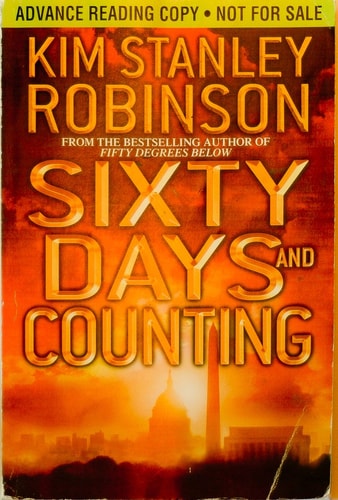
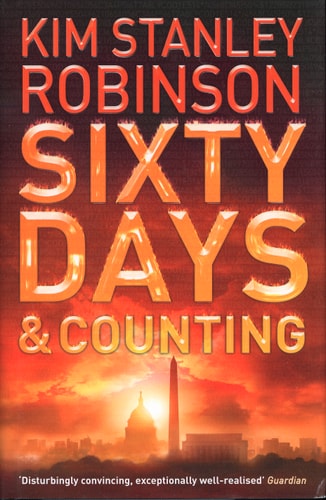
Sixty Days and Counting
0
0
As an Amazon Associate and affiliate partner, Menrva Books earns from qualifying purchases. Learn more
Author Description
In his first sixty days, President Phil Chase intends to prove he can change the world and solve climate change. A highly topical, witty and entertaining science thriller – the follow-up to Forty Days of Rain and Fifty Degrees Below.Frank Vanderwal, in the office of Presidential science advisor, finds something reassuring about the world being so messed up. It makes his own life look like part of a trend. He's been homeless for a year, the ex-husband of the love of his life did permanent injury to his nose – probably his brain – with a punch, and the love of his life has had to go into hiding from the secret service, which has Frank under surveillance, too... but meanwhile there's the world to save. Frank's a scientist. He has to save the world so that science can proceed, obviously. This has become known as the Frank Principle.China is close to meltdown, the security agencies are in overdrive, carbon figures are close to cooking the world... and the team has sixty days to establish a new reality.
Menrva's Summary
THE PULSE
President Phil Chase and his science advisor Frank Vanderwal race against a sixty-day deadline to implement radical climate policies before global systems collapse. As the administration navigates a volatile geopolitical landscape, Frank must balance his personal instability—stemming from past trauma and ongoing surveillance—with the immense pressure of engineering a sustainable future. The narrative utilizes a multi-perspective framework to track the intersection of high-level political maneuvering and the lived reality of a scientist attempting to apply the 'Frank Principle' to a warming planet. Opposing forces include entrenched security agencies, international instability in China, and the physical limitations of a biosphere nearing a critical tipping point.
INSIDE THE PAGES
- Detailed exploration of climate science and environmental policy implementation
- Political intrigue involving the White House and international security agencies
- Examination of the intersection between personal trauma and professional duty
- Non-linear progression of global environmental degradation
- Focus on the bureaucratic hurdles of systemic change
- Integration of scientific theory into political decision-making
- Portrayal of a near-future Washington D.C. under climate stress
- Character-driven narrative focusing on the psychological toll of global crisis
THE COLLECTIVE ECHO
This work is characterized by its dense focus on the mechanics of governance and the practical application of environmental science in a high-stakes political environment. The narrative style emphasizes the slow, often frustrating pace of institutional change, contrasting it with the urgent, existential threat of climate collapse. Readers often note the author's commitment to technical detail, which grounds the speculative elements in a recognizable, albeit strained, reality. The text functions as a rigorous examination of how individual agency interacts with massive, impersonal systems, offering a sober look at the complexities of global survival.
Page Count:
512
Publication Date:
2007-02-06
Publisher:
HarperCollins Publishers
ISBN-10:
0007405138
ISBN-13:
9780007405138
Science Fiction
Fantasy
Classics
Fiction
Thrillers
Mystery Thriller & Suspense
Spies & Politics
Literature & Fiction
Genre Fiction
Action Adventure
Political
Speculative Fiction
Political Thriller
Climate
Humorous
Supernatural
Literary
Humor & Satire
Science Fiction
Community Tags
Other Editions(3)
Similar Books