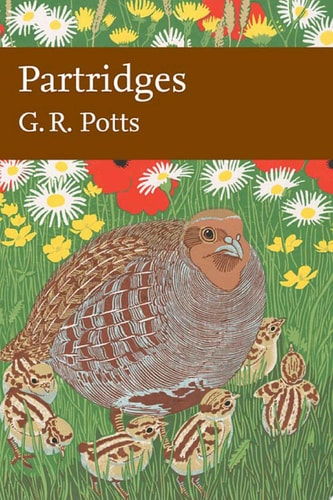
Partridges: Countryside Barometer
0
0
As an Amazon Associate and affiliate partner, Menrva Books earns from qualifying purchases. Learn more
Author Description
Globally, there are at least 45 species of game bird that have the word partridge in their name, but in this book G. R. Potts devotes himself to the Grey, Red-legged and Chukar Partridges, with particular emphasis on the Grey Partridge due to its well-known decline in Britain.In this groundbreaking addition to the New Naturalist series, Potts explores how mankind and partridges have evolved together, both ultimately dependent on grasslands rather than forests. For thousands of years, both ate grass seeds and this continued until cereals largely replaced them. Hundreds of species of plant and insect that partridges and other birds eat thrived on farms for thousands of years until the dawn of the pesticides era. Since then the long decline in partridge abundance has been a barometer for biodiversity over vast swathes of the Northern Hemisphere.Highlighting the positive example of the Norfolk Estate in the Sussex Study area, Potts investigates how both Grey and Red-legged Partridge numbers have been increased, flourishing in a highly productive and profitable system of farming and an oasis in what has often looked and sounded like a desert. In a small corner of England farmland wildlife is able to thrive much as it did before pesticides were introduced.This is a complex and fascinating story, with a heady mix of hunting, farming, predation, parasites, disease and climate change. The way these factors have interacted tells us a lot about how lesser known species have fared and how they can be conserved for the future. Potts stresses the importance of these conservation efforts, as farmers respond to the needs of an extra three billion people worldwide, not just for food but for bio-fuels. Additionally, the pressures on farmland wildlife will further intensify in the coming years.
Menrva's Summary
THE THESIS
This work investigates the decline of partridge populations as a primary indicator of broader ecological health and biodiversity loss within modern agricultural landscapes. G. R. Potts, a leading expert in game bird ecology, synthesizes decades of field data from the Sussex Study to analyze the intersection of farming practices, pesticide use, and wildlife survival. The author argues that the partridge serves as a critical barometer for the environmental impact of industrial agriculture, while demonstrating that sustainable management can successfully reverse these trends.
THE SCOPE MAP
What You Will Find
- Longitudinal data on Grey, Red-legged, and Chukar Partridge population trends.
- Analysis of the impact of pesticides and modern cereal farming on farmland biodiversity.
- Case studies from the Norfolk Estate demonstrating successful conservation within profitable farming systems.
- Examination of the complex interplay between predation, disease, climate change, and habitat loss.
THE AUTHORITY PERSPECTIVE
The text provides a dense, evidence-based examination of farmland ecology that serves as a definitive resource for conservationists and agricultural scientists. Its rigorous focus on long-term field studies establishes it as a significant contribution to the New Naturalist series.
Page Count:
480
Publication Date:
2012-09-27
Publisher:
HarperCollins UK
ISBN-10:
0007418728
ISBN-13:
9780007418725
Nature
Science
Animal Rights
Insects & spiders
Sports & Recreation
Technology & Engineering
Science
Hunting
Ecology
Ornithology
Conservation
Regional
Agriculture
Zoology
Life sciences
Nature
Environmental Conservation
Animals
Community Tags
Similar Books