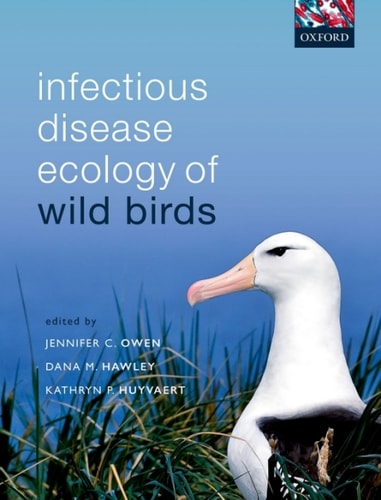
Infectious Disease Ecology of Wild Birds
0
0
As an Amazon Associate and affiliate partner, Menrva Books earns from qualifying purchases. Learn more
Author Description
Birds are the most diverse group of land vertebrates and have evolved to exploit almost every terrestrial niche on earth. They also serve as a natural reservoir for an array of different pathogens that pose serious health risks to human and domestic animal populations, including West Nile virus, highly pathogenic avian influenza viruses, Newcastle Disease virus, and numerous enteric pathogens. Avian diseases are also critically important to the conservation of endemic bird species in many places around the world. This accessible textbook focuses on the dynamics of infectious diseases for wild avian hosts across every level of ecological hierarchy, from the way pathogens interact with the physiology and behavior of individual hosts, the evolutionary and ecological dynamics of the host-parasite interactions occurring within populations, up to the complex biotic and abiotic interactions occurring within biological communities and ecosystems. Parasite-bird interactions are also increasingly occurring in rapidly changing global environments - thus, their ecology is also changing - and this shapes the complex ways by which parasites influence the inter-connected health of birds, humans, and shared ecosystems. Given the key role of birds in ecological communities more broadly, and as the primary host to so many zoonotic pathogens, an understanding of the ecological and evolutionary principles underlying the maintenance, amplification, transmission, and dispersal of these infectious agents is crucial to understanding how to mitigate the negative global impacts of the ever-increasing number of emerging infectious diseases. Although the topics and principles discussed in this book relate to birds, they have a far wider relevance and can also be applied to non-avian, wildlife host-pathogen systems. The COVID-19 pandemic has shown that understanding of disease ecology in wild animal populations is paramount to global health. Infectious Disease Ecology of Wild Birds is suitable
Menrva's Summary
THE THESIS
This text investigates the ecological and evolutionary principles governing the maintenance, transmission, and dispersal of infectious pathogens within wild avian populations. Author Maxime Lepoutre provides a comprehensive framework for understanding how avian hosts interact with pathogens across multiple scales, ranging from individual physiological responses to complex ecosystem-wide dynamics. The book argues that these interactions are critical to global health, particularly as environmental changes alter the transmission patterns of zoonotic diseases.
THE SCOPE MAP
What You Will Find
- Analysis of pathogen interactions at the individual, population, and community levels
- Examination of avian hosts as reservoirs for zoonotic pathogens like West Nile virus and avian influenza
- Discussion of the impact of global environmental change on host-parasite dynamics
- Theoretical frameworks applicable to non-avian wildlife systems
Scope Limits
- Does not provide clinical veterinary treatment protocols for individual birds
- Does not focus on captive or domestic poultry management outside of their ecological relationship to wild populations
THE AUTHORITY PERSPECTIVE
Experts identify this work as a foundational textbook for students and researchers interested in the intersection of ornithology and disease ecology. Readers frequently note the technical density of the prose, which effectively bridges the gap between specialized ecological theory and broader public health concerns.
Page Count:
842
Publication Date:
2021-01-01
Publisher:
OUP Oxford
ISBN-10:
0191063304
ISBN-13:
9780191063305
Science
Ornithology
Epidemiology
Zoology
textbook
Ecology
Community Tags
Similar Books