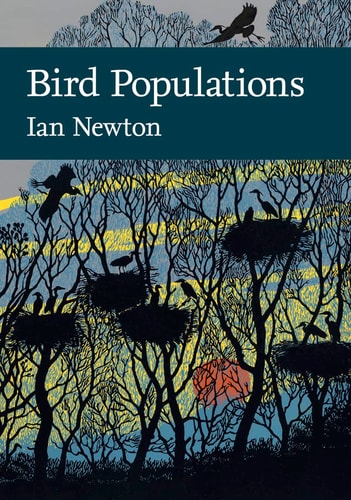
Bird Populations
0
0
As an Amazon Associate and affiliate partner, Menrva Books earns from qualifying purchases. Learn more
Author Description
In the latest addition to the New Naturalist series, Ian Newton explores bird populations and what causes their fluctuation – food supplies, competitors, predators, parasites, pathogens and human activity.The combination of a rapidly expanding human population, a predominantly utilitarian attitude to land, central government policy on land use and increasing mechanisation have combined to promote massive changes in land use in recent decades than at any previous comparable period. These developments have in turn brought huge changes in bird habitats and populations; some species dependent on the old landscapes declined, while others have increased. Over the same period, changing public attitudes to wildlife allowed previously scarce bird species to recover from past onslaughts, while climate warming has promoted further changes.In this seminal new work, Ian Newton sets out to explain why different bird species are distributed as they are, and changed over the years in the way that they have. The regular watching and study of birds now provides a source of recreation and pleasure for very large numbers of people, while continued monitoring of bird numbers can also alert us to impending environmental problems. For all of us, a world with fewer birds would be a poorer place.
Menrva's Summary
THE THESIS
This work investigates the complex ecological and anthropogenic factors that drive the fluctuation and distribution of bird populations over time. Ian Newton, a distinguished ornithologist, synthesizes decades of research to examine how variables such as food availability, predation, and habitat modification influence avian survival. The text provides a comprehensive framework for understanding the interplay between environmental change and the shifting demographics of bird species in the modern era.
THE SCOPE MAP
What You Will Find
- Analysis of ecological drivers including food supplies, competitors, and pathogens.
- Examination of the impact of human land-use policies and agricultural mechanization on avian habitats.
- Discussion of the effects of climate warming on species distribution and population recovery.
- Evaluation of long-term monitoring data as a tool for identifying broader environmental health trends.
THE AUTHORITY PERSPECTIVE
This volume is regarded as a rigorous and authoritative contribution to the long-standing New Naturalist series, reflecting the author's deep expertise in avian ecology. The text offers a dense, data-driven analysis that serves as a primary resource for both professional ornithologists and dedicated naturalists interested in the mechanics of population dynamics.
Page Count:
608
Publication Date:
2014-01-21
Publisher:
William Collins
ISBN-10:
0007429533
ISBN-13:
9780007429530
Nature
Science
Ecology
Biology
Birds
Ornithology
Community Tags
Similar Books