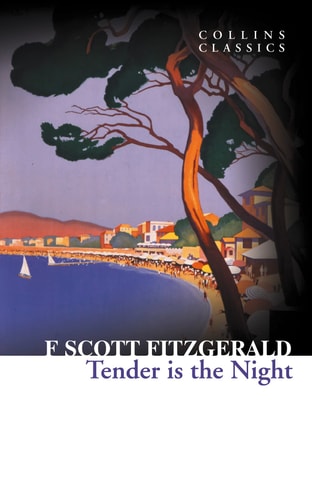
Tender Is the Night
0
0
As an Amazon Associate and affiliate partner, Menrva Books earns from qualifying purchases. Learn more
Author Description
From Collins Classics and the author of 'The Great Gatsby' a marriage unravels in this autobiographical tale. 'Sometimes it is harder to deprive oneself of a pain than of a pleasure.' Set on the French Riviera in the 1920s, American Dick Diver and his wife Nicole are the epitome of chic, living a glamorous lifestyle and entertaining friends at their villa. Young film star Rosemary Hoyt arrives in France and becomes entranced by the couple. It is not long before she is attracted to the enigmatic Dick, but he and his wife hold dark secrets and as their marriage becomes more fractured, Fitzgerald laments the failure of idealism and the carefully constructed trappings of high society in the Roaring Twenties.
Menrva's Summary
THE PULSE
The arrival of a young actress on the French Riviera exposes the fragile, decaying foundation of a marriage between a psychiatrist and his wealthy, mentally unstable wife. Dick Diver, a man of immense charm and professional promise, finds his life and identity slowly eroded by the demands of his wife, Nicole, and the hollow excesses of the expatriate social circle they inhabit. As Rosemary Hoyt enters their orbit, she witnesses the slow disintegration of the Divers' carefully curated facade, revealing the psychological toll of their codependency. The narrative, often shifting in perspective and temporal focus, captures the transition from the optimism of the early 1920s to the disillusionment that follows as the characters' internal lives collapse under the weight of their own artifice.
INSIDE THE PAGES
- Non-linear narrative structure that shifts between character perspectives and timelines
- Rich, evocative prose focusing on the atmosphere of the French Riviera
- Exploration of the psychological dynamics of codependency and mental illness
- Critique of the moral decay and superficiality of the Jazz Age elite
- Use of autobiographical elements reflecting the author's own life experiences
- Themes of lost idealism and the failure of the American Dream
- Symbolism centered on wealth, social status, and the loss of professional integrity
- Character-driven pacing that emphasizes internal conflict over external action
THE COLLECTIVE ECHO
This novel is widely regarded as a profound exploration of the fragility of human identity and the destructive nature of wealth. Critics often highlight the work's intricate structure and its departure from the more straightforward narrative style of the author's earlier successes. Readers frequently note the haunting quality of the prose, which captures the specific melancholy of the post-war era with precision. The text remains a central point of discussion for those interested in the intersection of personal tragedy and the broader societal shifts of the 1920s. Its reputation as a complex, layered study of decline continues to draw scholarly and popular attention decades after its initial publication.
Page Count:
434
Publication Date:
1934-04-12
Publisher:
HarperPress
ISBN-10:
0007449488
ISBN-13:
9780007449484
Romance
Historical
Classics
Literary
classic
Psychological
Tragedy
Fiction
Action Adventure
Community Tags
Other Editions(9)







Similar Books









Reader Comments
Share Your Thoughts
No comments yet. Be the first to share your thoughts!