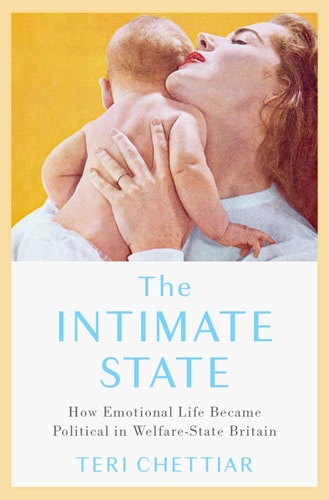
The Intimate State: How Emotional Life Became Political in Welfare-State Britain
0
0
As an Amazon Associate and affiliate partner, Menrva Books earns from qualifying purchases. Learn more
Author Description
The Intimate State explores how state-supported mental health initiatives made emotional intimacy both politically valued and personally desired during a crucial period of modern British psychiatric and cultural history. Focusing on the transformative decades following World War II, Teri Chettiar narrates the surprising story of how individual emotional wellbeing became conflated with inclusive democracy and subsequently prioritized in the eyes of scientists, politicians, and ordinary citizens. This new model of emotional health promoted nuclear families and monogamous marriage relationships as fundamental for individual and political stability and fostered unexpected collaborations between British mental health professionals and social reformers who sought to resolve the Cold War crisis in political and moral values. However, this model also generated backlash and resistance from communities who were excluded from its vision of idealized intimacy, including women, queer people, and adolescents. Ultimately, these communities would foster a new generation of activists who would turn the state agenda on its head by demanding political recognition for marginalized citizens on the basis of emotional health.Through new archival research, The Intimate State traces the rise of a modern psychiatric view of the importance of intimate relationships and the resultant political culture that continues to inform identity politics--and the politics of social equality--to this day.
Menrva's Summary
THE THESIS
This book investigates how the British welfare state transformed emotional intimacy into a central pillar of political stability and democratic health in the post-World War II era. Teri Chettiar, a historian specializing in modern British culture, utilizes extensive archival research to demonstrate how mental health professionals and social reformers collaborated to prioritize nuclear family structures. The author argues that this state-sponsored focus on emotional well-being created a new political framework that simultaneously reinforced social norms and sparked resistance from marginalized groups.
THE SCOPE MAP
What You Will Find
- Analysis of post-WWII British psychiatric and social policy.
- Examination of the intersection between Cold War political values and private emotional life.
- Documentation of the rise of identity politics as a response to state-defined intimacy.
Scope Limits
- The study focuses primarily on the British context and does not provide a comparative analysis of similar welfare states in other nations.
- The research emphasizes the mid-to-late 20th century and does not extend into contemporary 21st-century psychiatric developments.
THE AUTHORITY PERSPECTIVE
Scholars in the fields of history and sociology recognize this work as a significant contribution to the understanding of how state power influences private life. Readers frequently note the academic rigor of the archival research and the clarity with which the author connects psychiatric theory to political outcomes.
Page Count:
336
Publication Date:
2022-01-01
Publisher:
Oxford University Press
ISBN-10:
0190931221
ISBN-13:
9780190931223
Psychology
History
Allied Health
Sociology
Gender Studies
Medical
British History
Cultural History
Community Tags
Similar Books