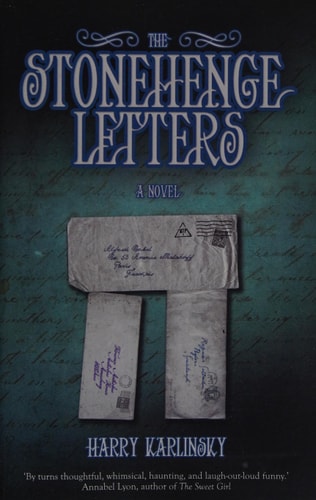
The Stonehenge Letters
0
0
As an Amazon Associate and affiliate partner, Menrva Books earns from qualifying purchases. Learn more
Author Description
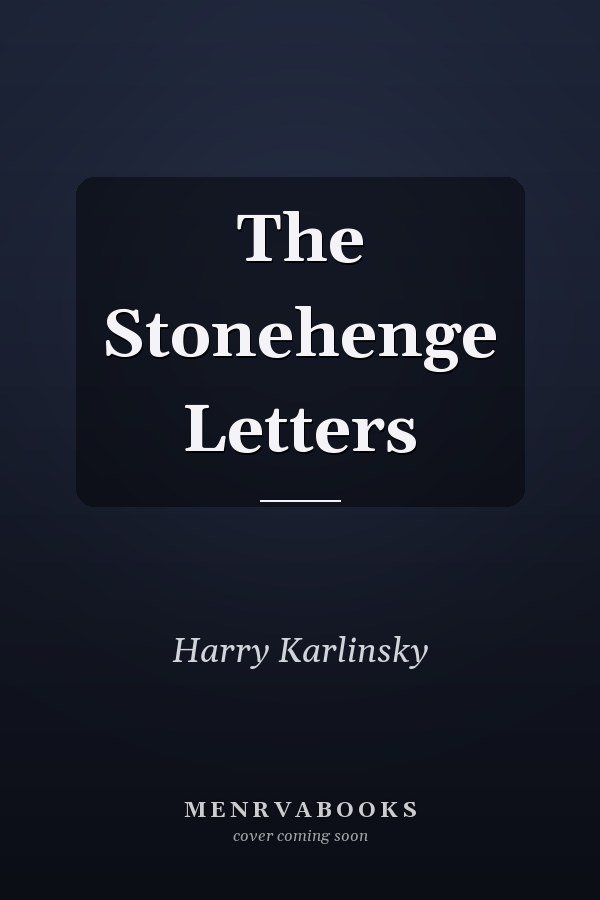
A remarkable new novel from the Wellcome Trust longlisted author.While digging through the Nobel Archives in Stockholm, trying to figure out why his hero, Sigmund Freud, never received a Nobel Prize, a psychiatrist makes an unusual discovery.Among the unsolicited self-nominations in the museum’s ‘Crackpot’ file there are six letters addressed to Mr Ragnar Sohlman, executor of Alfred Nobel’s will. Remarkably, all but one has been written by a Nobel laureate – including Rudyard Kipling, Ivan Pavlov, Teddy Roosevelt and Marie Curie. Each letter attempts to explain why and how Stonehenge was constructed. Diligent research eventually uncovers that Alfred Nobel, intrigued by a young woman's obsession with the mysterious landmark, added a secret codicil to his will:A prize – reserved exclusively for Nobel laureates – was to be awarded to the person who can solve the mystery of Stonehenge.Weaving together a wealth of primary documents – photos, letters, wills – The Stonehenge Letters is a wryly documented archive of a fascinating covert competition, complete with strange but illuminating submissions and a contentious prize-awarding process.But is this fact or is this fiction?
Menrva's Summary
THE PULSE
A psychiatrist’s search for the truth behind Sigmund Freud’s exclusion from the Nobel Prize leads to the discovery of a secret, centuries-old competition regarding the origins of Stonehenge. The protagonist, a researcher, navigates the archives of the Nobel Foundation, where he uncovers a series of letters written by historical luminaries such as Marie Curie and Rudyard Kipling. These documents reveal that Alfred Nobel established a clandestine prize for the individual who could solve the mystery of the ancient monument. The narrative unfolds through a blend of archival discovery and historical speculation, challenging the reader to distinguish between documented reality and creative invention.
INSIDE THE PAGES
- Epistolary narrative structure utilizing fictionalized correspondence
- Integration of historical figures including Rudyard Kipling, Ivan Pavlov, and Marie Curie
- Use of archival materials such as photos, wills, and letters to build authenticity
- Meta-fictional exploration of the boundary between historical fact and literary invention
- Academic setting within the Nobel Archives in Stockholm
- Wry, intellectual tone that mirrors the curiosity of the protagonist
- Focus on the historical obsession with the mystery of Stonehenge
- Non-linear progression through the discovery of disparate documents
THE COLLECTIVE ECHO
This novel is characterized by its playful engagement with historical record and its ability to construct a convincing, albeit fabricated, narrative around real-world figures. The work relies on the intellectual curiosity of the reader, inviting them to participate in the game of discerning truth from fiction. By utilizing the format of an archive, the author creates a sense of scholarly legitimacy that contrasts with the absurdity of the central premise. The narrative style is noted for its dry wit and meticulous attention to the period details of the early twentieth century. Ultimately, the book serves as a meditation on the nature of historical legacy and the human desire to solve unsolvable enigmas.
Page Count:
276
Publication Date:
2014-04-24
Publisher:
HarperCollins UK
ISBN-10:
0007464312
ISBN-13:
9780007464319
Literary Fiction
Historical Fiction
Suspense
History
Mystery
Expeditions & Discoveries
Technology & Engineering
Science
Alternative History
Academic
Historical
Fiction
Literary Criticism
Epistolary
Archaeology
Thrillers
Mashups
Literary
Social Science
Historiography