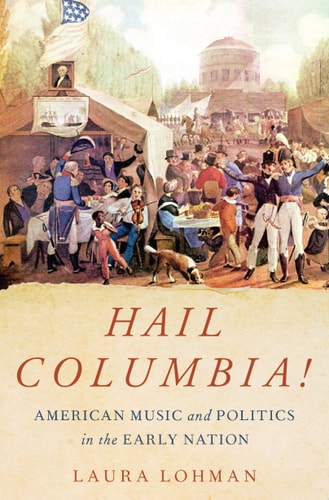
Hail Columbia!: American Music and Politics in the Early Nation
0
0
As an Amazon Associate and affiliate partner, Menrva Books earns from qualifying purchases. Learn more
Author Description
To the tune of "Yankee Doodle," the American obsession with politics was born alongside America itself. From the end of the Revolutionary War through to the antebellum era, music made front page news and brought men to blows. Both common citizens and politicians—even early presidents of the young nation—used well-known songs to fuel heated debates over the meaning of liberty, the future and nature of the republic, and Americans' proper place within it. As both propaganda and protest, music called for allegiance to a new federal government, spread utopian visions of worldwide revolution, broadcast infringements on American freedoms, and spun exaggerated tales of national military might. In Hail Columbia!, author Laura Lohman uncovers hundreds of songs circulated in newspapers, broadsides, song collections, sheet music, manuscripts, and scrapbooks over the late eighteenth and early nineteenth century. These give evidence that a diversity of Americans—elite lawyers, immigrant actresses, humble craftsmen, and African American abolitionists—employed music for political purposes, creating new and deeply partisan lyrics to famous tunes of "Yankee Doodle," "The Star-Spangled Banner," and the like. These charged versions found their way to electioneering, tavern gatherings, presidential encomia, street theatre, and community celebrations, making song a political weapon between neighbours and citizens, to hail the new nation in partisan terms.
Menrva's Summary
THE THESIS
This work investigates how music functioned as a primary vehicle for political discourse and partisan conflict in the United States from the post-Revolutionary era through the antebellum period. Laura Lohman, a musicologist, examines the intersection of popular song and early American governance by analyzing a vast array of primary sources. She argues that music was not merely entertainment but a potent tool for propaganda, protest, and the negotiation of national identity among diverse social classes. By tracing the adaptation of well-known melodies to serve specific political agendas, the author demonstrates how song became an essential component of the early republic's public sphere.
THE SCOPE MAP
What You Will Find
- Analysis of political song usage in newspapers, broadsides, and sheet music from the late 18th to early 19th century.
- Examination of how diverse demographics, including craftsmen, lawyers, and abolitionists, utilized music for partisan expression.
- Case studies on the adaptation of famous tunes like "Yankee Doodle" and "The Star-Spangled Banner" for electioneering and protest.
Scope Limits
- The study focuses primarily on the United States and does not provide a comparative analysis of contemporary European political music.
- The research concludes at the onset of the antebellum era and does not extend into the later 19th-century political landscape.
THE AUTHORITY PERSPECTIVE
Scholars and historians recognize this text as a significant contribution to the study of early American political culture and the role of music in public life. Readers frequently note the meticulous archival research and the clarity with which Lohman connects musical practice to the broader political tensions of the young nation.
Page Count:
340
Publication Date:
2019-01-01
Publisher:
Oxford University Press
ISBN-10:
0190930632
ISBN-13:
9780190930639
History
Criticism history
Political History
Music History
Humanities
American History
Community Tags
Similar Books