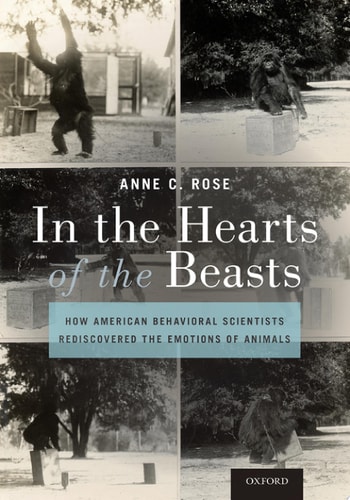
In the Hearts of the Beasts
0
0
As an Amazon Associate and affiliate partner, Menrva Books earns from qualifying purchases. Learn more
Author Description
Animals Cannot Use Words To Explain Whether They Feel Emotions, And Scientific Opinion On The Subject Has Been Divided. Charles Darwin Believed Animals And Humans Share A Common Core Of Fear, Anger, And Affection. Today Most Researchers Agree That Animals Experience Comfort Or Pain. Around 1900 In The United States, However, Where Intelligence Was The Dominant Interest In The Lab And Field, Animal Emotion Began As An Accidental Question. Organisms Ranging From Insects To Primates, Already Used To Test Learning, Displayed Appetites And Aversions That Pushed Psychologists And Biologists In New Scientific Directions. The Americans Were Committed Empiricists, And The Routine Of Devising Experiments, Observing, And Reflecting Permitted Them To Change Their Minds And Encouraged Them To Do So. By 1980, The Emotional Behavior Of Predatory Ants, Fearful Rats, Curious Raccoons, Resourceful Bats, And Shy Apes Was Part Of American Science. In This Open-ended Environment, The Scientists' Personal Lives--their Families, Trips Abroad, And Public Service--also Affected Their Professional Labor. The Americans Kept Up With The Latest Intellectual Trends In Genetics, Evolution, And Ethology, And They Sometimes Pioneered Them. But There Is A Bottom-up Story To Be Told About The Scientific Consequences Of Animals And Humans Brought Together In The Pursuit Of Knowledge. The History Of The American Science Of Animal Emotions Reveals The Ability Of Animals To Teach And Scientists To Learn.
Menrva's Summary
THE THESIS
This book investigates how the American scientific community transitioned from a focus on animal intelligence to the recognition and study of animal emotions between 1900 and 1980. Anne C. Rose, a historian of American intellectual life, utilizes archival research and historical analysis to demonstrate how empirical observation of diverse species—from insects to primates—forced researchers to reconsider their rigid frameworks. The text argues that the intersection of laboratory experimentation and the personal lives of scientists created a unique environment where the emotional lives of animals became a legitimate subject of scientific inquiry.
THE SCOPE MAP
What You Will Find
- Historical analysis of American psychological and biological research from 1900 to 1980.
- Examination of how specific species, including ants, rats, raccoons, bats, and apes, influenced scientific paradigms.
- Discussion of the interplay between intellectual trends like genetics and ethology and the personal experiences of the researchers.
Scope Limits
- The book does not provide a comprehensive biological manual on animal psychology.
- It does not cover non-American scientific developments in animal emotion outside of the specified timeframe.
THE AUTHORITY PERSPECTIVE
Scholars and readers frequently note the book's success in bridging the gap between the history of science and the study of animal behavior. Experts highlight this as a significant contribution to understanding how empirical methodology can evolve through the observation of non-human subjects.
Page Count:
208
Publication Date:
2020-01-01
Publisher:
Oxford University Press
ISBN-10:
0190935626
ISBN-13:
9780190935627
Non-Fiction
Psychology
Science History
Biology
Community Tags
Other Editions(2)
Similar Books