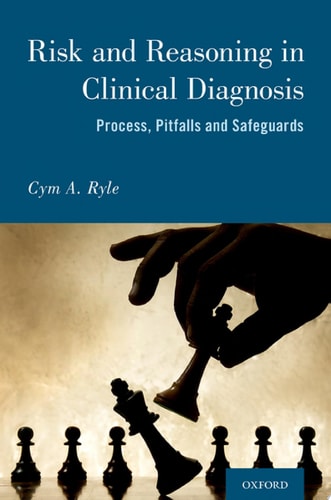
Risk and Reasoning in Clinical Diagnosis
0
0
As an Amazon Associate and affiliate partner, Menrva Books earns from qualifying purchases. Learn more
Author Description
Accurate diagnosis is the foundation of medical practice, but at the start of the diagnostic process, uncertainty is inevitable. The clinician's skills and cognitive attributes determine the quality of the initial differential diagnosis and thus the crucial first phases of investigation and treatment; mistakes are often self-propagating. Diagnostic error is a major cause of avoidable morbidity and mortality, and is the commonest reason for successful litigation.Risk and Reasoning in Clinical Diagnosis is an accessible and readable look at the diagnostic process. Dr. Cym Ryle presents the insights and concepts developed in cognitive psychology which have led to the consensus that in all domains human reasoning is primarily driven by unconscious, intuitive mechanisms; the contribution of structured, analytical thinking is variable and inconsistent. He notes that the risk of error is inseparable from these mechanisms.Dr. Ryle then develops a description of the diagnostic process which encompasses its form, strengths and fallibility, and illustrates this description with examples from his work as a general practitioner. He argues that improving diagnostic accuracy should be a priority, and that there is sufficient evidence to guide changes in medical training, in clinical practice, and in the culture and organisation of our institutions. He identifies specific, practical steps that can be taken by individual clinicians and by clinical teams, suggests priorities for action in our institutions, and considers the obstacles to progress.
Menrva's Summary
THE THESIS
This book investigates the cognitive mechanisms underlying clinical diagnostic errors and proposes systemic changes to improve diagnostic accuracy in medical practice. Dr. Cym Ryle, a general practitioner, synthesizes insights from cognitive psychology to explain how intuitive, unconscious reasoning processes often lead to diagnostic fallibility. He argues that because human reasoning is inherently prone to error, medical institutions and individual clinicians must adopt structured, analytical frameworks to mitigate risks and improve patient outcomes.
THE SCOPE MAP
What You Will Find
- Analysis of cognitive psychology principles applied to medical decision-making
- Examination of the relationship between intuitive reasoning and diagnostic error
- Practical strategies for individual clinicians and clinical teams to reduce mistakes
- Institutional recommendations for cultural and organizational reform
Scope Limits
- Does not provide a comprehensive clinical manual for specific disease diagnosis
- Does not cover the legal intricacies of medical malpractice litigation in detail
THE AUTHORITY PERSPECTIVE
Experts recognize this work as a valuable bridge between cognitive science and daily clinical practice. Readers frequently note the clarity of the prose, which makes complex psychological concepts accessible to medical professionals working in high-pressure environments.
Page Count:
208
Publication Date:
2019-01-01
Publisher:
Oxford University Press
ISBN-10:
0190944021
ISBN-13:
9780190944025
Diagnosis
Allied Health
Physician & Patient
Professional Development
Medical
Decision Making
Community Tags
Similar Books