
The Ipcress File
0
0
As an Amazon Associate and affiliate partner, Menrva Books earns from qualifying purchases. Learn more
Author Description
Len Deighton's classic first novel, whose protagonist is a nameless spy - later christened Harry Palmer and made famous worldwide in the iconic 1960s film starring Michael Caine.The Ipcress File was not only Len Deighton's first novel, it was his first bestseller and the book that broke the mould of thriller writing.When a number of scientists mysteriously disappear in Berlin, what seems to be a straightforward case rapidly becomes a journey to the heart of a dark and deadly conspiracy. It is a conspiracy that takes Len Deighton's working-class hero on a journey that will test him to the limits of his ingenuity and resolve, and call on him to prove himself as a spy at the very top of his game.The film of The Ipcress File gave Michael Caine one of his first and still most celebrated starring roles, while the novel itself has become a classic.
Menrva's Summary
THE PULSE
A nameless intelligence operative must navigate a web of bureaucratic incompetence and lethal brainwashing to recover missing scientists during the height of the Cold War. Tasked with investigating the disappearance of high-level researchers, the protagonist finds himself caught between the rigid, often obstructive hierarchies of British intelligence and a shadowy enemy organization. The narrative, presented through a gritty, first-person perspective, emphasizes the mundane, administrative realities of espionage rather than glamorous heroics. As he follows the trail from London to the Pacific, he must rely on his own cynical wit to survive a conspiracy that threatens his sanity and his life.
INSIDE THE PAGES
- First-person narrative voice characterized by dry, cynical wit
- Detailed focus on the bureaucratic and administrative mechanics of intelligence work
- Non-linear presentation of reports, memos, and internal documents
- Exploration of psychological conditioning and brainwashing techniques
- Realistic, working-class protagonist who operates outside the traditional gentleman-spy archetype
- Atmospheric depiction of 1960s London and international locales
- Emphasis on procedural investigation over high-octane action sequences
- Subversion of Cold War espionage tropes and institutional loyalty
THE COLLECTIVE ECHO
This novel is widely regarded as a foundational text in the evolution of the spy thriller genre, noted for its departure from the romanticized depictions of espionage prevalent at the time of its release. Critics and readers alike have praised the work for its authentic, grounded tone and its ability to capture the claustrophobic paranoia of the Cold War era. The protagonist's distinct voice and the book's innovative use of bureaucratic documents have cemented its status as a classic of twentieth-century literature. Its enduring influence is evident in the way it paved the way for more realistic, cynical portrayals of intelligence agencies in subsequent fiction.
Page Count:
272
Publication Date:
1962-11-01
Publisher:
HarperCollins Publishers
ISBN-10:
0007652011
ISBN-13:
9780007652013
Mystery
Thriller
classic
Subjects
Genre Fiction
Spy Fiction
Cold War
English literature
British & Irish
Fiction thrillers
Military
Mystery Thriller & Suspense
Spies & Politics
Historical
Literature & Fiction
Crime
Community Tags
Other Editions(29)
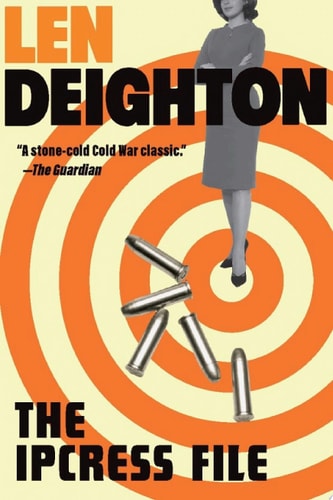
Grove/Atlantic, Inc.
2023
Default edition
Grove/Atlantic, Incorporated
2023

Random House
2022

Penguin Books, Limited
2022

Penguin Books Limited
2021
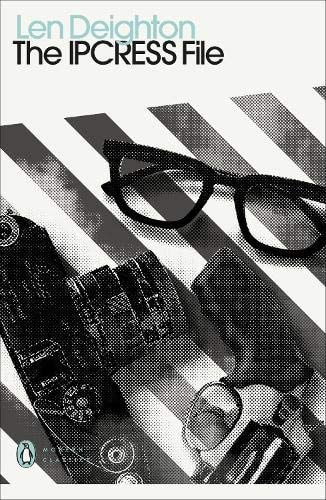
Penguin Canada
2021

HarperCollins Publishers
2019

Harper
2015

Sterling
2011

HarperCollins UK
2009

HarperCollins
2009

Harper
2007

Chivers Press
2001

Chivers
2001

Blackstone Pub
1999

HarperPaperbacks
1994

Books on Tape, Inc.
1990

Random House Value Publishing
1990

Franklin Library
1988
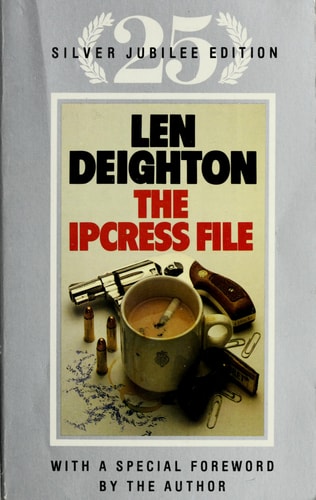
Grafton
1987

Random House Publishing Group
1985

Random House Publishing Group
1982
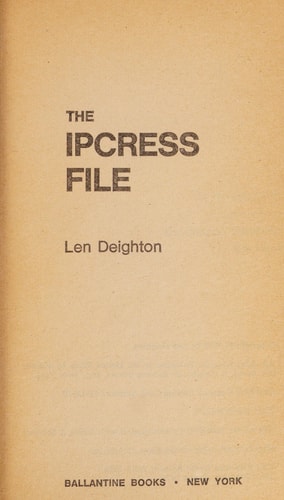
Random House Publishing Group
1979

Ballantine Books
1976

Random House Publishing Group
1974

Hodder and Stoughton
1974

Fawcett
1965
HarperCollins Publishers
1962

Chivers Press
1962
Similar Books












Reader Comments
Share Your Thoughts
No comments yet. Be the first to share your thoughts!