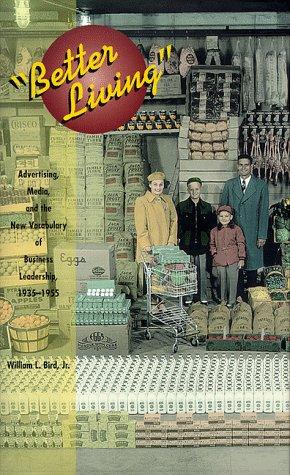
Better Living: Advertising, Media, and the New Vocabulary of Business Leadership, 1935-1955
0
0
As an Amazon Associate and affiliate partner, Menrva Books earns from qualifying purchases. Learn more
Author Description
"Better Living": Advertising, Media, and the New Vocabulary of Business Leadership, 1935-1955 is a history of how big business learned to be both entertaining and persuasive when talking to the public. Examining the years from the Depression to postwar prosperity, "Better Living" follows the dissemination of a politically competitive claim of "more," "new," and "better" in industry and in life. Beginning with the changes in business-government relations during the New Deal, this study looks at the ways in which politically active corporations and their leaders learned how to speak - at a time when speaking was not enough. Using archival sources such as the NBC, Ford Motor Company, DuPont, and Franklin Delano Roosevelt collections, William L. Bird, Jr., establishes the importance of industrial films and their role in public relations and employee relations, as well as the use of dramatic radio productions in corporate public relations. The author examines the interplay between general mass radio and print advertising, radio program sponsorship and scriptwriting, sponsored motion pictures and television entertainment, as well as exhibitions and industrial fairs and the role these media played in shaping ideas about American business and political and cultural institutions in this country for the decades to come.
Menrva's Summary
THE THESIS
This book investigates how American big business transformed its communication strategies from the 1930s to the 1950s to become both persuasive and entertaining to the public. William L. Bird, Jr., drawing on extensive archival research from collections like NBC, Ford Motor Company, and DuPont, argues that corporations learned to disseminate a compelling narrative of progress and improvement during this era of shifting business-government relations. The study details the critical role of industrial films, dramatic radio productions, and mass media advertising in shaping public perception of American business and its place within cultural and political institutions.
THE SCOPE MAP
- The evolution of corporate public relations and employee relations through industrial films.
- The strategic use of dramatic radio productions and program sponsorship in corporate messaging.
- The interplay between mass media advertising, sponsored motion pictures, and emerging television entertainment.
- The function of exhibitions and industrial fairs in shaping public ideas about American business.
- An examination of the period from the Great Depression through postwar prosperity.
- Analysis of the dissemination of concepts like "more," "new," and "better" in industry and life.
THE AUTHORITY PERSPECTIVE
The book is recognized for its detailed examination of corporate communication strategies during a pivotal period in American history. It is noted for its use of primary sources to illustrate how businesses adapted their messaging to engage the public and shape perceptions. The work highlights the significant impact of media, including industrial films and radio, on the development of modern business leadership vocabulary. This historical analysis provides insight into the long-term influence of these communication techniques on American business and culture.
Page Count:
288
Publication Date:
1999-01-01
ISBN-10:
0810115859
Non-Fiction
History
Business
Advertising
Corporate History
Media Studies
Community Tags
Similar Books