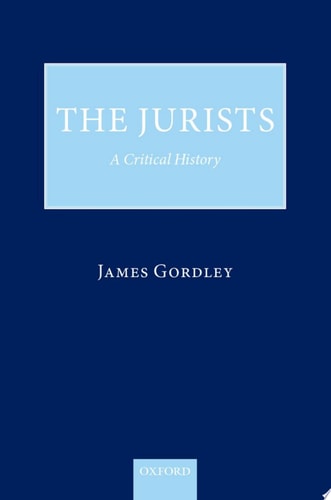
Jurists: A Critical History
0
0
As an Amazon Associate and affiliate partner, Menrva Books earns from qualifying purchases. Learn more
Author Description
The Book Is An Intellectual History Of The Work Of Western Jurists From Ancient Rome To The Present. It Discusses The Roman Jurists, The Medieval Civilians And Canon Lawyers, The Late Scholastics, The Natural Law Schools Of The 17th And 18th Centuries, The Positivism And Conceptualism Of The 19th Century And Its Influence On Common Law, And The Reaction Against Conceptualism Since The Late 19th Century. Rarely Have Jurists Worked Alone. Rather, They Have Worked In Schools, Each Of Which Pursued A Different Project. The Projects Of The Jurists Had One Element In Common: They Were Attempts To Understand And Explain The Law. Commitment To That Project Defines The Work Of A Jurist And Distinguishes It From The Work Of Others Who Take Part In Fashioning And Applying The Law. Yet The Project Of Each School Of Jurists Had Goals And Methods Of Its Own. By Identifying Them, This Study Shows How The Jurists Themselves Understood Their Work And How These Goals And Methods Shaped And Limited What Each School Could Achieve.
Menrva's Summary
THE THESIS
This work investigates the intellectual evolution of Western legal thought by examining the shifting projects, goals, and methodologies of jurists from Ancient Rome to the modern era. James Gordley, a scholar of comparative law and legal history, utilizes a comparative framework to analyze how distinct schools of thought have attempted to define, explain, and structure the law over two millennia. By focusing on the internal logic of these schools, the author argues that the specific objectives of each group both enabled and constrained their contributions to legal development.
THE SCOPE MAP
What You Will Find
- Analysis of Roman jurists, Medieval civilians, and Canon lawyers
- Examination of Late Scholasticism and 17th-18th century Natural Law schools
- Review of 19th-century Positivism and Conceptualism and their impact on Common Law
- Discussion of the post-19th-century reaction against legal conceptualism
Scope Limits
- Does not provide a comprehensive history of political or social institutions outside of their direct influence on legal theory
- Does not focus on the practical application of law in non-Western jurisdictions
THE AUTHORITY PERSPECTIVE
Legal scholars and historians frequently cite this text as a rigorous, high-level synthesis of Western legal philosophy. Readers often note the academic density of the prose, which is intended for those with a foundational understanding of legal history and theory.
Page Count:
390
Publication Date:
2013-01-01
Publisher:
Oxford University Press
ISBN-10:
0191003816
ISBN-13:
9780191003813
History
Philosophy
Law history
Legal History
Law europe
Jurisprudence
Law
Interpretation and construction
Lawyers
Intellectual History
Community Tags
Similar Books