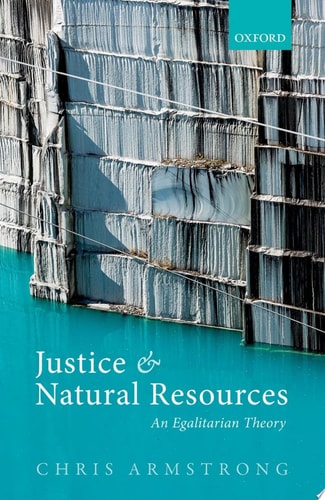
Justice and Natural Resources
0
0
As an Amazon Associate and affiliate partner, Menrva Books earns from qualifying purchases. Learn more
Author Description
Struggles over precious resources such as oil, water, and land are increasingly evident in the contemporary world. States, indigenous groups, and corporations vie to control access to those resources, and the benefits they provide. These conflicts are rapidly spilling over into new arenas, such as the deep oceans and the polar regions. How should these precious resources be governed, and how should the benefits and burdens they generate be shared? Justice and Natural Resources provides a systematic theory of natural resource justice. It argues that we should use the benefits and burdens flowing from these resources to promote greater equality across the world, and share governance over many important resources. At the same time, the book takes seriously the ways in which particular resources can matter in peoples lives. It provides invaluable guidance on a series of pressing issues, including the scope of state resource rights, the claims of indigenous communities, rights over ocean resources, the burdens of conservation, and the challenges of climate change and transnational resource governance. It will be required reading for anyone interested in natural resource governance, climate politics, and global justice.
Menrva's Summary
THE THESIS
How should natural resources be governed, and how should the benefits and burdens they generate be shared among states, corporations, and indigenous groups? Chris Armstrong, a political theorist, constructs a systematic theory of natural resource justice that advocates for using resource-derived benefits to promote global equality. He balances the necessity of shared governance with a nuanced consideration of how specific resources impact individual and community lives, providing a framework for evaluating competing claims over land, water, and minerals.
THE SCOPE MAP
What You Will Find
- A theoretical framework for distributive justice regarding natural resources
- Analysis of state resource rights versus indigenous claims
- Examination of transnational governance in emerging arenas like deep oceans and polar regions
- Ethical evaluation of conservation burdens and climate change mitigation
Scope Limits
- The text focuses primarily on political and ethical theory rather than technical engineering or geological resource management
- It does not provide a comprehensive legal manual for specific international treaty negotiations
THE AUTHORITY PERSPECTIVE
Experts identify this work as a significant contribution to the intersection of environmental ethics and global political theory. Readers frequently note the academic density of the prose, which serves as a rigorous guide for scholars and policymakers addressing resource-based conflicts.
Page Count:
304
Publication Date:
2017-01-01
Publisher:
Oxford University Press
ISBN-10:
0191007307
ISBN-13:
9780191007309
Philosophy
Ethics
Global Justice
Natural Resources
Community Tags
Similar Books