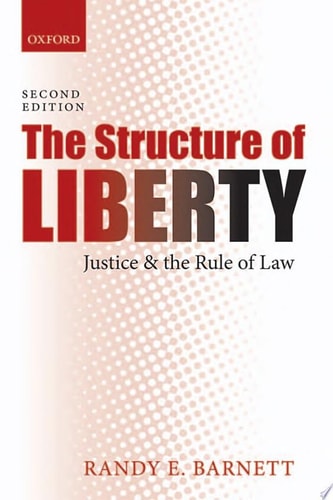
The Structure of Liberty
0
0
As an Amazon Associate and affiliate partner, Menrva Books earns from qualifying purchases. Learn more
Author Description
In This Book, Legal Scholar Randy Barnett Elaborates And Defends The Fundamental Premise Of The Declaration Of Independence: That All Persons Have A Natural Right To Pursue Happiness So Long As They Respect The Equal Rights Of Others, And That Governments Are Only Justly Established To Secure These Rights. Drawing Upon Insights From Philosophy, Economics, Political Theory, And Law, Barnett Explains Why, When People Pursue Happiness While Living In Society With Each Other, They Confront The Pervasive Social Problems Of Knowledge, Interest And Power. These Problems Are Best Dealt With By Ensuring The Liberty Of The People To Pursue Their Own Ends, But This Liberty Is Distinguished From License By Certain Fundamental Rights And Procedures Associated With The Classical Liberal Conception Of Justice And The Rule Of Law. He Then Outlines The Constitutional Framework That Is Needed To Put These Principles Into Practice. In A New Afterword To This Second Edition, Barnett Elaborates On This Thesis By Responding To Several Important Criticisms Of The Original Work. He Then Explains How This Libertarian Approach Is More Modest Than Either The Social Justice Theories Of The Left Or The Legal Moralism Of The Right.
Menrva's Summary
THE THESIS
This book investigates the fundamental question of how a society can justly organize itself to protect individual liberty while addressing the inherent social problems of knowledge, interest, and power. Randy E. Barnett, a prominent legal scholar, utilizes a multidisciplinary approach to argue that the protection of natural rights is the primary purpose of legitimate government. By synthesizing insights from philosophy, economics, and political theory, he constructs a framework for a classical liberal legal order that distinguishes liberty from license. The text provides a rigorous defense of the idea that government authority is only justified when it serves to secure the rights of individuals to pursue their own happiness.
THE SCOPE MAP
What You Will Find
- A comprehensive analysis of the classical liberal conception of justice and the rule of law.
- An examination of the social problems of knowledge, interest, and power in a free society.
- A proposed constitutional framework designed to implement and protect individual rights.
- A critical response to contemporary social justice theories and legal moralism.
Scope Limits
- The text does not provide a detailed historical account of specific court cases or legislative histories.
- It does not offer a practical manual for political activism or policy implementation.
THE AUTHORITY PERSPECTIVE
Legal scholars and political theorists frequently cite this work as a foundational text for understanding modern libertarian constitutionalism. Readers often note the academic density of the prose, which requires a high level of engagement with the underlying philosophical and economic arguments.
Page Count:
400
Publication Date:
2014-01-01
Publisher:
Oup Oxford
ISBN-10:
0191004340
ISBN-13:
9780191004346
Economics
Law
Political Philosophy
Libertarianism
Constitutional Law
Community Tags
Similar Books