Author Description
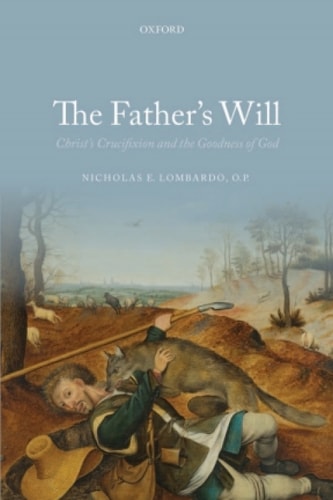
The night before his crucifixion, in the garden of Gethsemane, Jesus asks his Father to take away the cup of his suffering, but then says, "not my will, but yours, be done." Shortly afterward, Judas arrives, and his arrival reveals something important about the Father's will. Yet much remains obscure. The sheer fact of Christ's crucifixion shows only that God was not willing to spare his Son. It does not shed any light on the positive content of the Father's will. Drawing on philosophical analysis and historical-critical exegesis, The Father's Will sets out to clarify the Father's will for Christ and how it relates to his death on the cross. Then, after considering the theologies of Anselm and Peter Abelard, it argues for the recovery of the early Christian category of ransom. Since Christians look to the crucifixion to make sense of their suffering, the Father's will for Christ relates to many existential questions; it also shapes the place of God the Father in Christian theology and culture. Interpreting the crucifixion as a ransom makes the goodness of God more evident. It also makes it easier to see God the Father as the author of our salvation, rather than a stern judge who must be placated. And since the category of ransom traces back to Jesus' saying in the Gospels about giving his life "as a ransom for many" it has great claim to interpret the crucifixion in the way Jesus himself interpreted it.
Menrva's Summary
THE THESIS
This book investigates the theological problem of how the crucifixion of Christ aligns with the goodness of God the Father. Nicholas E. Lombardo, a scholar of historical and systematic theology, utilizes philosophical analysis and historical-critical exegesis to examine the nature of the Father's will. He argues that recovering the early Christian concept of ransom provides a more coherent framework for understanding the crucifixion as an act of divine love rather than a punitive judicial transaction.
THE SCOPE MAP
What You Will Find
- Philosophical analysis of divine will and suffering
- Historical-critical exegesis of Gospel accounts regarding the crucifixion
- Comparative study of Anselmian and Abelardian atonement theories
- Re-evaluation of the ransom motif in early Christian theology
Scope Limits
- Does not provide a comprehensive history of all atonement theories
- Does not address modern secular critiques of Christian theology in depth
THE AUTHORITY PERSPECTIVE
Scholars and theologians recognize this work as a rigorous contribution to the study of atonement and the character of God. Readers frequently note the academic density of the prose, which is best suited for those already familiar with systematic theology and historical debates.
Page Count:
288
Publication Date:
2013-01-01
Publisher:
OUP Oxford
ISBN-10:
0191002283
ISBN-13:
9780191002281
Philosophy
Religion
Theology
Jesus Christ
Redemption
Christianity
Community Tags
Similar Books