Augustine's Early Thought on the Redemptive Function of Divine Judgement
Author Description
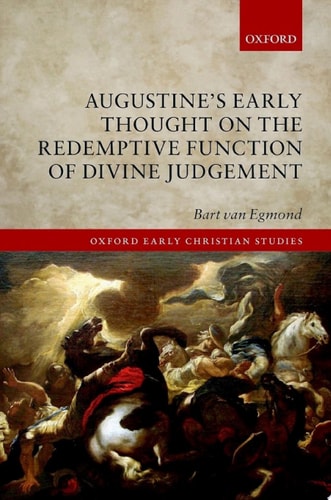
Augustine's Early Thought on the Redemptive Function of Divine Judgement considers the relationship between Augustine's account of God's judgment and his theology of grace in his early works. How does God use his law and the penal consequences of its transgression in the service of his grace, both personally and through his 'agents' on earth? Augustine reflected on this question from different perspectives. As a teacher and bishop, he thought about the nature of discipline and punishment in the education of his pupils, brothers, and congregants. As a polemicist against the Manichaeans and as a biblical expositor, he had to grapple with issues regarding God's relationship to evil in the world, the violence God displays in the Old Testament, and in the death of his own Son. Furthermore, Augustine meditated on the way God's judgment and grace related in his own life, both before and after his conversion. Bart van Egmond follows the development of Augustine's early thought on judgment and grace from the Cassiacum writings to the Confessions. The argument is contextualized both against the background of the earlier Christian tradition of reflection on the providential function of divine chastisement, and the tradition of psychagogy that Augustine inherited from a variety of rhetorical and philosophical sources. This study expertly contributes to the ongoing scholarly discussion on the development of Augustine's doctrine of grace, and to the conversation on the theological roots of his justification of coercion against the Donatists.
Menrva's Summary
THE THESIS
This study investigates how Augustine of Hippo conceptualized the redemptive capacity of divine judgment and its integration with his evolving theology of grace during his early career. Bart van Egmond, a scholar of early Christian thought, examines the intersection of pedagogical discipline, biblical exegesis, and personal conversion. By analyzing Augustine's writings from the Cassiacum period through the Confessions, the author argues that Augustine viewed divine punishment not as a contradiction to grace, but as a providential tool for moral and spiritual formation.
THE SCOPE MAP
What You Will Find
- Analysis of Augustine's early works including the Cassiacum writings and the Confessions.
- Examination of the theological relationship between divine law, penal consequences, and grace.
- Contextualization of Augustine's thought within the traditions of Christian chastisement and classical psychagogy.
Scope Limits
- The study focuses primarily on Augustine's early development and does not provide a comprehensive analysis of his later anti-Pelagian writings.
- The research is limited to the specific thematic intersection of judgment and grace rather than a general survey of Augustine's entire philosophical system.
THE AUTHORITY PERSPECTIVE
Scholars recognize this work as a rigorous contribution to the study of Augustinian theology, particularly regarding the roots of his later views on coercion. Readers frequently note the academic density of the prose, which is intended for specialists in patristics and historical theology.
Page Count:
301
Publication Date:
2018-01-01
Publisher:
OUP Oxford
ISBN-10:
0192571869
ISBN-13:
9780192571861
History
Philosophy
Religion
Redemption
Patristics
Christianity
Academic
Theology
Community Tags
Similar Books