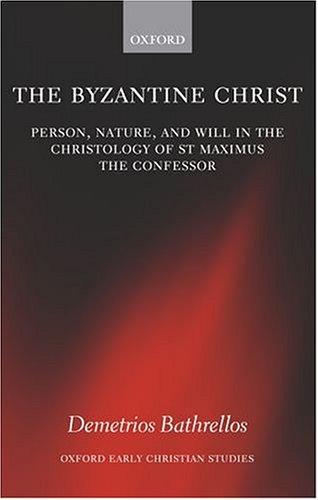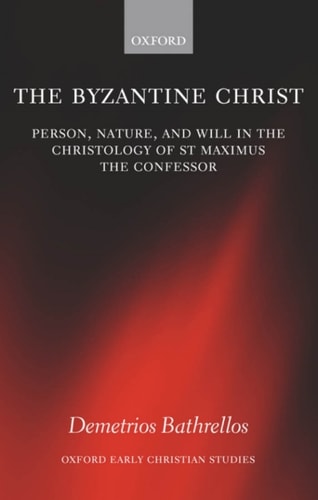
The Byzantine Christ: Person, Nature, and Will in the Christology of Saint Maximus the Confessor
0
0
As an Amazon Associate and affiliate partner, Menrva Books earns from qualifying purchases. Learn more
Author Description
St Maximus the Confessor is one of the giants of Christian theology. His doctrine of two wills gave the final shape to ancient Christology and was ratified by the Sixth Ecumenical Council in AD 681. This study throws new light upon one of the most interesting periods of historical and systematic theology. Its focus is the seventh century, the century that saw the rapid expansion of Islam, and the Empire's failed attempt to retain many of its south-eastern provinces by inventing and promoting the heresy of Monothelitism (only one will in Christ) as a bridge between the Byzantine Church and the anti-Chalcedonian Churches which prevailed in some of these areas. From the point of view of systematic theology, the book examines the meaning of the terms person/hypostasis, nature/essence, and will in the context of Christology after the Council of Chalcedon (AD 451), with special reference to Maximus. It also explores the complex question of the human will of Jesus Christ and its relation to his person and natures. The Byzantine Christ enhances our understanding of Eastern Orthodox theology and of some of the reasons that still separate it both from Western Christianity and from the so-called Oriental Orthodox Churches.
Menrva's Summary
THE THESIS
This work investigates the Christological doctrine of Saint Maximus the Confessor, specifically focusing on the theological necessity and implications of the two wills in Christ. The author, Demetrios Bathrellos, utilizes a systematic theological framework to analyze the historical context of the seventh-century Byzantine Empire. By examining the conflict between Chalcedonian orthodoxy and the Monothelite heresy, the text clarifies how Maximus’s definitions of person, nature, and will shaped the trajectory of Eastern Orthodox thought.
THE SCOPE MAP
What You Will Find
- Analysis of seventh-century Christological debates following the Council of Chalcedon.
- Examination of the terms hypostasis, nature, and will within Byzantine theology.
- Investigation into the political and religious motivations behind the promotion of Monothelitism.
- Theological exploration of the human will of Jesus Christ.
Scope Limits
- The text does not provide a comprehensive biography of Maximus the Confessor.
- It does not cover the entirety of post-Chalcedonian history beyond the specific Christological controversies of the seventh century.
THE AUTHORITY PERSPECTIVE
Scholars and theologians frequently cite this work as a definitive analysis of Maximus the Confessor’s contribution to Christology. Readers often note the academic density of the prose, which requires a foundational understanding of patristic terminology.
Page Count:
240
Publication Date:
2004-01-01
Publisher:
OUP Oxford
ISBN-10:
0191531723
ISBN-13:
9780191531729
Religion
History
Philosophy
Byzantine History
Jesus Christ
Patristics
Christianity
Theology