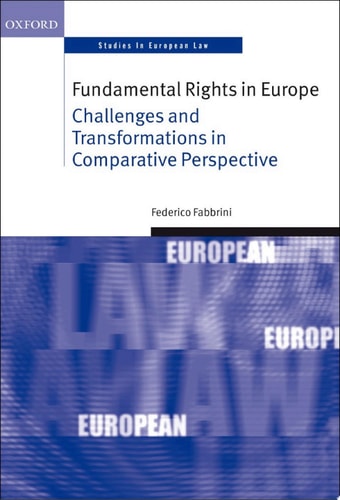
Fundamental Rights in Europe: Challenges and Transformations in Comparative Perspective
0
0
As an Amazon Associate and affiliate partner, Menrva Books earns from qualifying purchases. Learn more
Author Description
The European architecture for the protection of fundamental rights combines the legal regimes of the states, the European Union, and the European Convention on Human Rights. The purpose of this book is to analyse the constitutional implications of this multilevel architecture and to examine the dynamics that spring from the interaction between different human rights standards in Europe. The book adopts a comparative approach, and through a comparison with the federal system of the United States, it advances an analytical model that systematically explains the dynamics at play in the European multilevel human rights architecture. It identifies two recurrent challenges in the interplay between different state and transnational human rights standards-a challenge of ineffectiveness, when transnational law operates as a ceiling of protection for a specific human right, and a challenge of inconsistency when transnational law operates as a floor-and considers the most recent transformations taking place in the European human rights regime. The book tests the model of challenges and transformations by examining in depth four case studies: the right to due process for suspected terrorists, the right to vote for non-citizens, the right to strike and the right to abortion. In light of these examples, the book then concludes by reassessing the main theories on the protection of fundamental rights in Europe and making the case for a new vision-a 'neo-federal' theory-which is able to frame the dilemmas of identity, equality and supremacy behind the European multilevel architecture for the protection of human rights.
Menrva's Summary
THE THESIS
This book investigates the constitutional implications and structural dynamics of the multilevel architecture for the protection of fundamental rights in Europe. Federico Fabbrini, a scholar of European law, utilizes a comparative framework to analyze how state, European Union, and European Convention on Human Rights regimes interact. By contrasting the European system with the federal model of the United States, the author proposes a 'neo-federal' theory to address persistent dilemmas regarding identity, equality, and legal supremacy.
THE SCOPE MAP
What You Will Find
- A comparative analysis of European and United States federal human rights frameworks
- An analytical model identifying challenges of ineffectiveness and inconsistency in transnational law
- Case studies on due process for suspected terrorists, voting rights for non-citizens, the right to strike, and abortion rights
- A proposed 'neo-federal' theoretical framework for European human rights protection
Scope Limits
- The analysis is restricted to the specific interplay between state, EU, and ECHR legal regimes
- The text does not provide an exhaustive survey of all fundamental rights, focusing instead on four specific case studies
THE AUTHORITY PERSPECTIVE
Legal scholars and practitioners identify this work as a significant contribution to the study of European constitutionalism and multilevel governance. Readers frequently note the academic density of the prose and the rigor of the comparative methodology employed by the author.
Page Count:
337
Publication Date:
2014-01-01
Publisher:
OUP Oxford
ISBN-10:
0191006580
ISBN-13:
9780191006586
European Law
Comparative Law
Law
Human rights
Constitutional Law