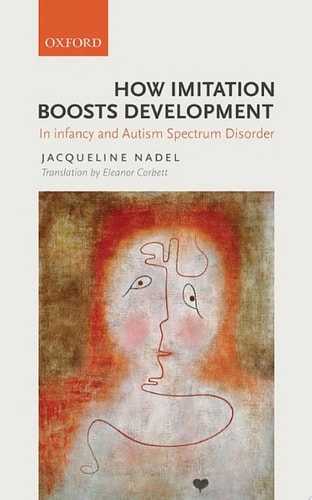
How Imitation Boosts Development: In Infancy and Autism Spectrum Disorder
0
0
As an Amazon Associate and affiliate partner, Menrva Books earns from qualifying purchases. Learn more
Author Description
It was Plato who famously stated that 'imitation is dangerous because it stifles creativity, hampers the development of personal identity and disrupts the perception of other people as unique beings'. There are some who still feel this way, and perhaps this explains why imitation has received less attention within the developmental literature than other human characteristics. So why are humans able to imitate - from the very second they enter the world? Can it have positive effects? Can it help us interact with others better? Can it even make us feel better about ourselves and our ability to influence and interact with the world around us? In this book, a leading development psychologist explores the topic of imitation - looking at why we imitate and the possible benefits it might bring - in particular to those affected by Autism Spectrum Disorders. The book offers fascinating insights into an often neglected topic.
Menrva's Summary
THE THESIS
This book investigates the fundamental role of imitation in human development and its specific application as a therapeutic or developmental tool for individuals on the autism spectrum. Jacqueline Nadel, a developmental psychologist, challenges the historical philosophical skepticism toward imitation by presenting it as a core mechanism for social interaction and identity formation. The text synthesizes research on early infancy and neurodivergent development to argue that imitation serves as a bridge for interpersonal connection and environmental influence.
THE SCOPE MAP
What You Will Find
- Analysis of imitation behaviors in neonates and infants
- Theoretical frameworks linking imitation to social cognition
- Clinical observations regarding imitation deficits and potential interventions in autism
- Examination of the psychological benefits of reciprocal imitation
Scope Limits
- Does not provide a comprehensive clinical manual for autism therapy
- Does not focus on adult-onset neurological conditions or acquired imitation disorders
THE AUTHORITY PERSPECTIVE
Experts recognize this work as a significant contribution to the study of social-cognitive development, particularly for its focus on a neglected behavioral mechanism. Readers frequently note that the prose maintains a high level of academic rigor while remaining accessible to those interested in the intersection of developmental psychology and neurodiversity.
Page Count:
271
Publication Date:
2014-01-01
Publisher:
OUP Oxford
ISBN-10:
0191008990
ISBN-13:
9780191008993
Psychology
Developmental Psychology
Family & Consumer Sciences
Community Tags
Similar Books