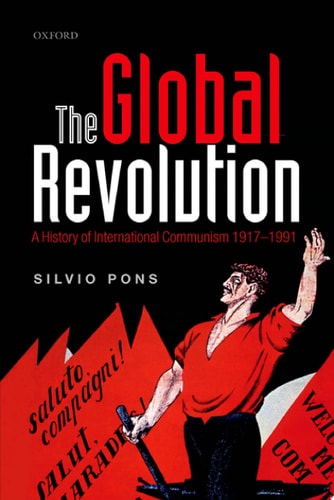
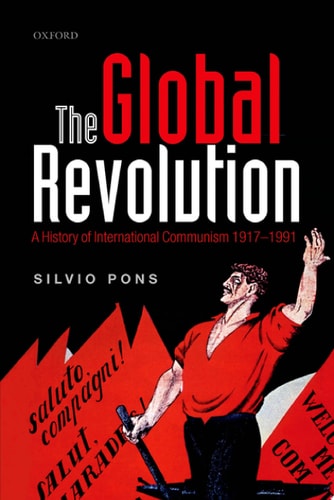
The Global Revolution: A History of International Communism 1917-1991
0
0
As an Amazon Associate and affiliate partner, Menrva Books earns from qualifying purchases. Learn more
Author Description
The Global Revolution. A History Of International Communism 1917-1991 Establishes A Relationship Between The History Of Communism And The Main Processes Of Globalization In The Past Century. Drawing On A Wealth Of Archival Sources, Silvio Pons Analyses The Multifaceted And Contradictory Relationship Between The Soviet Union And The International Communist Movement, To Show How Communism Played A Major Part In The Formation Of Our Modern World. The Volume Presents The Argument That During The Age Of Wars From 1914 To 1945, The Establishment Of The Soviet State In Russia And The Birth Of The Communist Movement Had An Enormous Impact Because Of Their Promise Of World Revolution And International Civil War. Such Perspective Appeared Even More Plausible In The Aftermath Of The Second World War And Of Revolution In China, Which Paved The Way For The Expansion Of Communism In The Post-colonial World. Communism Challenged The West In The Cold War - By Means Of Anti-capitalist Modernization And Anti-imperialist Mobilization - Showing Itself To Be A Powerful Factor In The Politicization Of Global Trends. However, The International Legitimacy Of Communism Declined Rapidly In The Post-war Era. Soviet Power Exposed Its Inability To Exercise Hegemony, As Distinct From Domination. The Consequences Of Sovietization In Europe And The Break Between The Soviet Union And China Were The Primary Reasons For The Decline Of Communist Influence And Appeal. Since Communism Lost Its Political Credibility And Cultural Cohesion, Its Global Project Had Failed. The Ground Was Prepared For The Devastating Impact Of Western Globalization On Communist Regimes In Europe And The Soviet Union.
Menrva's Summary
THE THESIS
This work investigates how the history of international communism from 1917 to 1991 functioned as a primary driver and antagonist within the broader processes of 20th-century globalization. Silvio Pons, a historian specializing in the Soviet Union and international communism, utilizes extensive archival research to examine the tension between the Soviet state and the global communist movement. He argues that communism acted as a significant force in modern world formation by challenging Western hegemony through anti-capitalist and anti-imperialist frameworks before ultimately collapsing due to internal contradictions and a loss of political legitimacy.
THE SCOPE MAP
What You Will Find
- Analysis of the Soviet Union's role in the international communist movement from 1917 to 1991.
- Examination of the impact of the Age of Wars on the promise of world revolution.
- Evaluation of the geopolitical shift following the Chinese Revolution and post-colonial movements.
- Assessment of the factors leading to the decline of communist influence, including the Sino-Soviet split.
Scope Limits
- The text focuses primarily on the international and geopolitical dimensions of communism rather than detailed domestic social histories of every individual communist state.
THE AUTHORITY PERSPECTIVE
Scholars and historians recognize this volume as a comprehensive synthesis of the relationship between Soviet foreign policy and global political trends. Readers frequently note the academic density of the prose, which provides a rigorous framework for understanding the rise and fall of the international communist project.
Page Count:
400
Publication Date:
2014-01-01
Publisher:
Oup Oxford
ISBN-10:
0191015024
ISBN-13:
9780191015021
History
International relations
Communism
20th Century
Globalization
Community Tags
Other Editions(3)
Similar Books





Reader Comments
Share Your Thoughts
No comments yet. Be the first to share your thoughts!