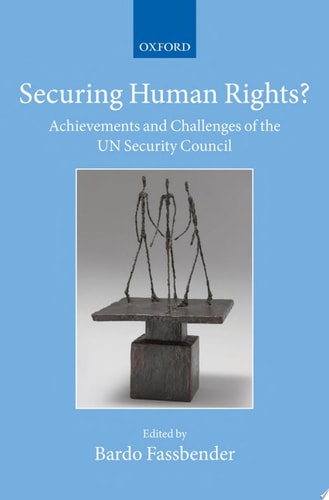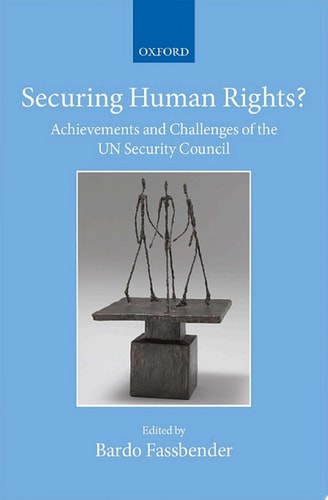
Securing Human Rights?: Achievements and Challenges of the UN Security Council
0
0
As an Amazon Associate and affiliate partner, Menrva Books earns from qualifying purchases. Learn more
Author Description
Throughout the first decades of its existence, many held the view that the UN Security Council would in some senses automatically encourage the protection of human rights by maintaining international peace. However since the end of the Cold War there have been growing concerns that the Council is a force with the potential to do harm to the cause of human rights, even to the extent of violating the rights of individuals. The chapters of this volume take a closer look at these two sides of the Security Council's involvement in human rights; both its efforts to promote and enforce human rights, and its actions that, with the intention of maintaining and restoring international peace, also have the potential to jeopardize human rights. This book represents a collection of individual views and appraisals of how the Council has dealt with human rights issues in the post-Cold War period, particularly in the cases of the economic sanctions imposed on Iraq and the targeted sanctions directed against the Taliban and supporters of the Al Qaida network. Written by experts in the field of international law, they are both positive and negative, critical and analytical. Together they offer a selection of different perspectives and evaluate the contribution of the Security Council to the promotion of human rights, highlighting possible avenue for improvement.
Menrva's Summary
THE THESIS
This volume investigates the complex and often contradictory role of the United Nations Security Council in balancing the maintenance of international peace with the protection of individual human rights. Bardo Fassbender compiles a series of expert analyses that examine the evolution of the Council's mandate since the end of the Cold War. The contributors utilize legal frameworks and historical case studies to evaluate whether the Council acts as a guardian of human rights or a potential violator of individual liberties.
THE SCOPE MAP
What You Will Find
- Analysis of post-Cold War Security Council interventions.
- Legal evaluation of economic sanctions against Iraq.
- Examination of targeted sanctions against the Taliban and Al Qaida networks.
- Diverse scholarly perspectives on international law and institutional accountability.
Scope Limits
- The text does not provide a comprehensive history of the UN Security Council prior to the Cold War.
- It does not offer a singular policy recommendation but rather a collection of varied expert appraisals.
THE AUTHORITY PERSPECTIVE
Experts recognize this collection as a significant contribution to the study of international institutional law and the intersection of security and human rights. Readers frequently note the academic density of the prose, making it a resource primarily intended for legal scholars and practitioners in the field of international relations.
Page Count:
235
Publication Date:
2011-01-01
Publisher:
OUP Oxford
ISBN-10:
0191018481
ISBN-13:
9780191018480
Human rights
Law
Professional Career & Trade
International Law
United Nations
International relations