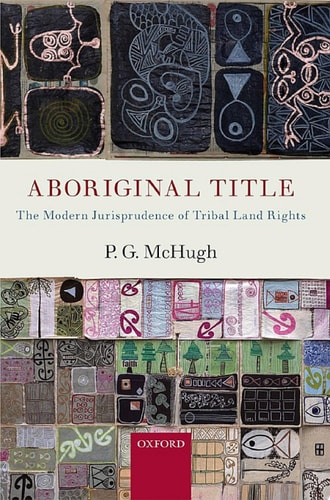
Aboriginal Title: The Modern Jurisprudence of Tribal Land Rights
0
0
As an Amazon Associate and affiliate partner, Menrva Books earns from qualifying purchases. Learn more
Author Description
Aboriginal title represents one of the most remarkable and controversial legal developments in the common law world of the late-twentieth century. Overnight it changed the legal position of indigenous peoples. The common law doctrine gave sudden substance to the tribes' claims to justiciable property rights over their traditional lands, catapulting these up the national agenda and jolting them out of a previous culture of governmental inattention. In a series of breakthrough cases national courts adopted the argument developed first in western Canada, and then New Zealand and Australia by a handful of influential scholars. By the beginning of the millennium the doctrine had spread to Malaysia, Belize, southern Africa and had a profound impact upon the rapid development of international law of indigenous peoples' rights. This book is a history of this doctrine and the explosion of intellectual activity arising from this inrush of legalism into the tribes' relations with the Anglo settler state. The author is one of the key scholars involved from the doctrine's appearance in the early 1980s as an exhortation to the courts, and a figure who has both witnessed and contributed to its acceptance and subsequent pattern of development. He looks critically at the early conceptualisation of the doctrine, its doctrinal elaboration in Canada and Australia - the busiest jurisdictions - through a proprietary paradigm located primarily (and constrictively) inside adjudicative processes. He also considers the issues of inter-disciplinary thought and practice arising from national legal systems' recognition of aboriginal land rights, including the emergent and associated themes of self-determination that surfaced more overtly during the 1990s and after. The doctrine made modern legal history, and it is still making it.
Menrva's Summary
THE THESIS
This book investigates the historical development and legal evolution of the common law doctrine of Aboriginal title as it emerged across various Anglo settler states. The author, P. G. McHugh, is a prominent legal scholar who participated directly in the development of these doctrines since the 1980s. He utilizes a combination of historical analysis and legal theory to examine how indigenous property claims shifted from governmental neglect to central components of national and international jurisprudence.
THE SCOPE MAP
What You Will Find
- Historical analysis of the emergence of Aboriginal title in Canada, New Zealand, and Australia.
- Examination of the proprietary paradigm within adjudicative processes.
- Discussion of the intersection between legal recognition and the broader themes of self-determination.
- Comparative study of the doctrine's expansion into Malaysia, Belize, and southern Africa.
Scope Limits
- The text focuses primarily on common law jurisdictions and may not cover civil law approaches to indigenous land rights.
- The analysis is centered on the legalistic and adjudicative aspects of the doctrine rather than a comprehensive anthropological study of specific tribal cultures.
THE AUTHORITY PERSPECTIVE
Legal scholars and practitioners view this work as a definitive account of the intellectual and judicial history of indigenous land rights. Readers frequently note the academic density of the prose, which provides a rigorous examination of the doctrine's rapid development and its ongoing influence on international law.
Page Count:
376
Publication Date:
2011-01-01
Publisher:
OUP Oxford
ISBN-10:
0191018546
ISBN-13:
9780191018541
Human rights
Land tenure
Legal History
Law
Professional Career & Trade
Property Law
Community Tags
Other Editions(2)

Similar Books



Reader Comments
Share Your Thoughts
No comments yet. Be the first to share your thoughts!