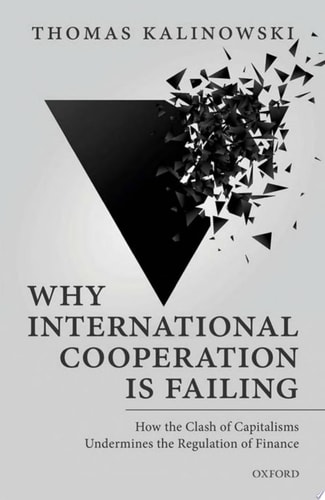
Why International Cooperation Is Failing
0
0
As an Amazon Associate and affiliate partner, Menrva Books earns from qualifying purchases. Learn more
Author Description
Since The Global Financial Crisis Of 2008/09, International Cooperation Has Failed To Curb Volatile Financial Markets. Changes In The Global Rules Of Finance Discussed In The G20 During The Last Decade Remain Limited, And It Is Uncertain Whether They Are Suitable To Help Mitigate And Manage Future Crises To Come. This Book Offers An Alternative To The Popular Notion That This Failure Is The Result Of The 'nature' Of The International System, The Clash Of National Egoisms, Or Lack Of Leadership. It Instead Investigates Problems Of International Cooperation By Looking At Their Deeper Structural Origins In The Competition Of Different Models Of Capitalism. Us Finance-led, Eu Integration-led, And East Asian State-led Capitalism Complement Each Other Globally But Have Conflicting Preferences On How To Regulate International Finance. This Interdependence Of Capitalist Models Is Relatively Stable But Also Prone To Crises Caused By Volatile Financial Flows, Global Economic Imbalances, And 'currency Wars'. By Bringing Together Approaches From International Political Economy And Comparative Capitalism, This Book Shows That Regulating International Finance Is Not A Technocratic Exercise Of Fine-tuning The Machinery Of International Institutions, But Rather A Political Process. International Cooperation Can Only Be Successful If It Goes Hand In Hand With Deep Domestic Changes In Each Of These Capitalist Models.
Menrva's Summary
THE THESIS
This book investigates why international cooperation has failed to effectively regulate global financial markets since the 2008 financial crisis. Thomas Kalinowski, a scholar in international political economy, challenges the conventional wisdom that attributes this failure to national egoism or a lack of leadership. Instead, he argues that the root cause lies in the structural competition between distinct models of capitalism—specifically the US finance-led, EU integration-led, and East Asian state-led systems—which possess fundamentally conflicting regulatory preferences.
THE SCOPE MAP
What You Will Find
- Analysis of the G20's regulatory efforts following the 2008/09 financial crisis.
- A comparative framework contrasting US, EU, and East Asian capitalist models.
- Examination of the interplay between global economic imbalances and volatile financial flows.
Scope Limits
- The book does not provide a comprehensive history of all international financial institutions.
- It does not offer a technical manual for specific financial policy implementation.
THE AUTHORITY PERSPECTIVE
Experts in international political economy recognize this work as a significant contribution to understanding the intersection of domestic capitalist structures and global governance. Readers frequently note the academic rigor of the text, which effectively bridges the gap between comparative capitalism and international relations theory.
Page Count:
304
Publication Date:
2019-01-01
Publisher:
Oxford University Press
ISBN-10:
0191024147
ISBN-13:
9780191024146
Economics
Globalization
International relations
Finance
Community Tags
Other Editions(2)

Similar Books