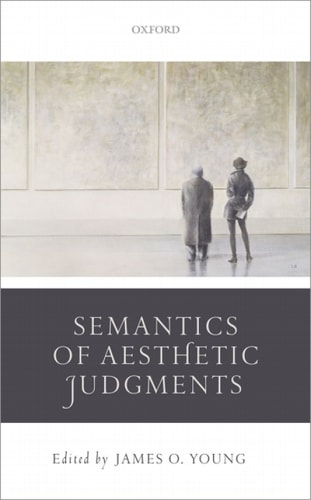
Semantics of Aesthetic Judgements
0
0
As an Amazon Associate and affiliate partner, Menrva Books earns from qualifying purchases. Learn more
Author Description
The question of whether aesthetic judgements are simply statements about subjective preferences or whether they have some non-subjective basis is one of the most important questions of aesthetics, and, indeed, of philosophy. In recent years, philosophers of language have discussed aesthetic judgements, but have assumed that aesthetic judgements are similar to judgements that employ predicates of personal taste such as 'tasty' and 'delicious.' A speaker's judgement that an item of food is tasty is a report about the speaker's subjective response to that item of food. If aesthetic judgements are like judgements that employ predicates of personal taste, to judge that the St. Matthew Passion is glorious is also a report about what some listener likes. If two people disagree about whether the St. Matthew Passion is glorious, neither has made a mistake. Philosophers of art have tended to disagree with this view. They have distinguished aesthetic predicates such as 'serene,' 'balanced,' and 'glorious' from predicates such as 'tasty.' On this view, the judgement that some artwork is serene or even that it is beautiful is a report about the work, not a report about how a person responds to the work. Aesthetic judgements are not just statements about personal preferences. This volume brings together some of the leading contemporary philosophers of art and philosophers of language to debate the status of aesthetic judgements. Are they simply expressions of personal preference? Is there more basis for saying that a painting is beautiful or serene than there is for saying that a cake is tasty? Is disagreement about aesthetic judgements faultless or can someone be mistaken about the aesthetic value of an artwork?
Menrva's Summary
THE THESIS
This volume investigates whether aesthetic judgements function as objective claims about the properties of artworks or merely as subjective expressions of personal preference. The editor, James O. Young, compiles essays from prominent philosophers of art and language to examine the semantic status of aesthetic predicates. The text challenges the prevailing assumption that aesthetic evaluations are functionally equivalent to expressions of personal taste, such as those regarding food, by analyzing the logical structure and normative implications of aesthetic discourse.
THE SCOPE MAP
What You Will Find
- Comparative analysis between aesthetic predicates and predicates of personal taste
- Philosophical arguments regarding the possibility of error in aesthetic disagreement
- Theoretical frameworks distinguishing between subjective response and objective property attribution
Scope Limits
- Does not provide a comprehensive history of aesthetic theory
- Does not offer a practical guide for art criticism or evaluation
THE AUTHORITY PERSPECTIVE
Experts recognize this collection as a significant contribution to the intersection of aesthetics and the philosophy of language. Readers frequently note the academic density of the prose, which is intended for scholars and advanced students of philosophy.
Page Count:
240
Publication Date:
2017-01-01
Publisher:
OUP Oxford
ISBN-10:
0191023981
ISBN-13:
9780191023989
Philosophy
Industrial Psychology
Philosophy of
Art Theory
Academic
Business Economics
Aesthetics
Semantics
Community Tags
Similar Books