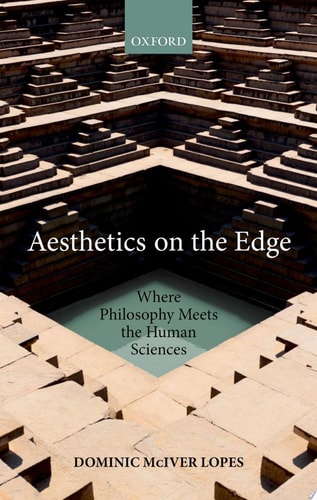
Aesthetics on the Edge
0
0
As an Amazon Associate and affiliate partner, Menrva Books earns from qualifying purchases. Learn more
Author Description
Philosophers say what art is and then scientists and then other scholars study how we are equipped, cognitively and socially, to make art and appreciate it. This time-honoured approach will not work. Recent science reveals that we have poor intuitive access to artistic and aesthetic phenomena. Dominic McIver Lopes argues for a new approach that mandates closer integration, from the start, between aesthetics and the human sciences. In these eleven essays he proposes a methodology especially suited to aesthetics, where problems in philosophy are addressed principally by examining how aesthetic phenomena are understood in the human sciences. Since the human sciences include much of the humanities as well as the social, behavioural, and brain sciences, the methodology promises to integrate arts research across the academy. Aesthetics on the Edge opens with a four essays outlining the methodology and its potential. The following essays put the methodology to work, shedding light on the perceptual and social-pragmatic capacities that are implicated in responding to works of art, especially images, but also music, literature, and conceptual art.
Menrva's Summary
THE THESIS
Can the traditional divide between philosophical aesthetics and the human sciences be bridged to provide a more accurate understanding of artistic phenomena? Dominic McIver Lopes, a prominent philosopher of art, argues that current philosophical approaches to aesthetics are limited by a lack of intuitive access to how we actually engage with art. He proposes a new methodology that mandates the integration of philosophical inquiry with the social, behavioral, and brain sciences from the outset of research.
THE SCOPE MAP
What You Will Find
- A methodological framework for integrating aesthetics with the human sciences
- Analysis of perceptual and social-pragmatic capacities in art appreciation
- Application of the proposed methodology to images, music, literature, and conceptual art
- Eleven essays exploring the intersection of philosophy and empirical research
Scope Limits
- The text does not provide a comprehensive history of aesthetic theory
- It does not offer a manual for artistic creation or practice
THE AUTHORITY PERSPECTIVE
Scholars in the field recognize this work as a significant contribution to the naturalization of aesthetics. Readers frequently note the academic density of the prose, which is intended for an audience familiar with contemporary philosophical discourse and cognitive science.
Page Count:
272
Publication Date:
2018-01-01
Publisher:
Oxford University Press
ISBN-10:
0192516736
ISBN-13:
9780192516732
Philosophy
Art Theory
Aesthetics
Humanities
Philosophy of
Community Tags
Similar Books