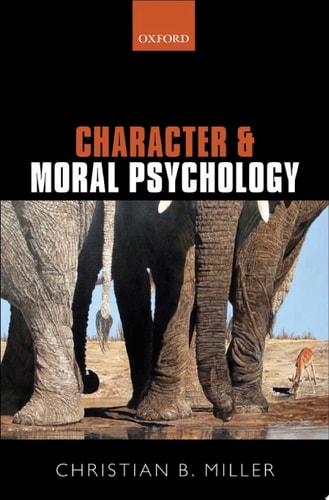
Character and Moral Psychology
0
0
As an Amazon Associate and affiliate partner, Menrva Books earns from qualifying purchases. Learn more
Author Description
Philosophers and psychologists have been hard at work trying to unlock the mysteries of our characters. Unfortunately, their answers have been all over the map. According to one position, every single person has all of the moral virtues, such as modesty and compassion, although to varying degrees. Yet according to another position, no one has any character traits at all since they are simply illusions and do not exist. Hence not one person is honest or compassionate or courageous. And between these extremes, there are plenty of intermediate views. Christian B. Miller argues that not one of these leading positions accurately reflects what most of us are like today. He explores the implications of the Mixed Trait framework-a theory of moral character developed in his previous book, Moral Character: An Empirical Theory. Mixed traits have both morally positive aspects (hence they are not vices) along with morally negative aspects (hence they are not virtues). Miller engages with the other leading positions on the empirical nature of character: situationism, the CAPS model, the Big Five model, and the local trait model. He goes on to apply the Mixed Trait framework to several important topics in ethics, especially the development of an error theory about judgments of character and the challenge faced by virtue ethics from the widespread lack of virtue.
Menrva's Summary
THE THESIS
This book investigates the empirical nature of human character by evaluating whether traditional virtues exist or if character traits are merely illusory. Christian B. Miller, a professor of philosophy, synthesizes findings from both psychological research and philosophical inquiry to challenge prevailing academic models. He proposes the Mixed Trait framework as a more accurate description of human behavior, arguing that most individuals possess traits that contain both positive and negative moral components rather than pure virtues or vices.
THE SCOPE MAP
What You Will Find
- Analysis of the Mixed Trait framework as a descriptive model for human character.
- Comparative evaluation of situationism, the CAPS model, the Big Five model, and the local trait model.
- Application of character theory to error theory in moral judgments.
- Examination of the challenges posed to virtue ethics by empirical data regarding human behavior.
Scope Limits
- The text does not provide a comprehensive guide to self-improvement or moral development.
- It does not focus on theological or religious perspectives of character.
THE AUTHORITY PERSPECTIVE
Scholars in the fields of ethics and psychology frequently cite this work as a rigorous engagement with the empirical challenges facing virtue ethics. Readers often note the high level of academic density, making it a specialized resource for those already familiar with contemporary debates in moral psychology.
Page Count:
285
Publication Date:
2014-01-01
Publisher:
OUP Oxford
ISBN-10:
0191022659
ISBN-13:
9780191022654
Psychology
Philosophy
Virtue
Character Theory
Ethics
Character
Community Tags
Similar Books