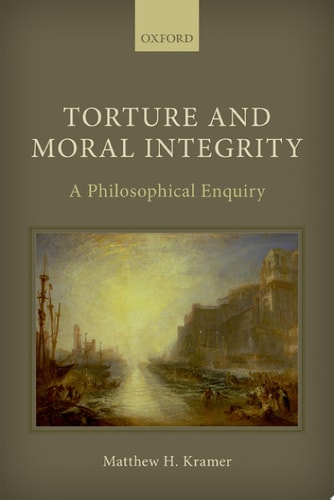
Torture and Moral Integrity
0
0
As an Amazon Associate and affiliate partner, Menrva Books earns from qualifying purchases. Learn more
Author Description
Torture And Moral Integrity Tackles A Concrete Moral Problem That Has Been Hotly Debated By Governments, Scholars, And The Media: The Morality Of Interrogational Torture. It Discusses Multiple Types Of Torture With Great Philosophical Acuity And Seeks To Explain Why Interrogational Torture And Other Types Of Torture Are Always And Everywhere Morally Wrong. At The Same Time, It Rigorously Plumbs The General Structure Of Morality And The Intricacies Of Moral Conflicts And Probes Some Of The Chief Grounds For The Moral Illegitimacy Of Various Modes Of Conduct. It Defends A Deontological Conception Of Morality Against The Subtle Critiques That Have Been Mounted Over The Past Few Decades By Proponents Of Consequentialism. Kramer's Recommendations Concerning The Legal Consequences Of The Perpetration Of Torture By Public Officials Or Private Individuals, For Example, Are Based Squarely On His More Abstract Accounts Of The Nature Of Torture And The Nature Of Morality. His Philosophical Reflections On The Structure Of Morality Are A Vital Background For His Approach To Torture, And His Approach To Torture Is A Natural Outgrowth Of Those Philosophical Reflections.
Menrva's Summary
THE THESIS
This book investigates the core question of whether interrogational torture can ever be morally justified, ultimately arguing that it is always and everywhere morally wrong. Matthew H. Kramer, a professor of legal and political philosophy, utilizes a rigorous deontological framework to challenge consequentialist justifications for torture. By examining the nature of moral conflicts and the structure of moral integrity, he provides a systematic defense against arguments that seek to permit torture under specific, extreme circumstances.
THE SCOPE MAP
What You Will Find
- A deontological analysis of interrogational torture
- A critique of consequentialist moral theories
- Philosophical examination of the structure of moral conflicts
- Proposals regarding the legal consequences for perpetrators of torture
Scope Limits
- The text does not provide a historical survey of torture practices
- It does not focus on empirical data regarding the efficacy of interrogation techniques
THE AUTHORITY PERSPECTIVE
Scholars frequently note the high level of philosophical rigor and the dense, analytical nature of Kramer's prose. Experts highlight this work as a significant contribution to contemporary debates on human rights and the limits of state-sanctioned conduct.
Page Count:
350
Publication Date:
2014-01-01
Publisher:
Oup Oxford
ISBN-10:
0191023639
ISBN-13:
9780191023637
Philosophy
Law
Human rights
Ethics
Moral Philosophy
Community Tags
Similar Books