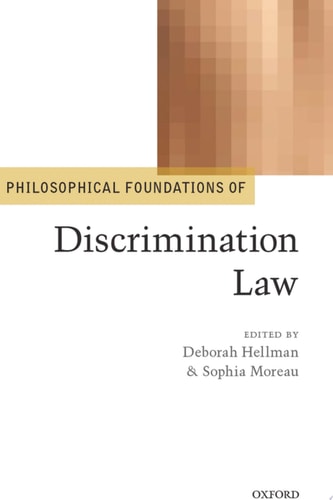
Philosophical Foundations of Discrimination Law
0
0
As an Amazon Associate and affiliate partner, Menrva Books earns from qualifying purchases. Learn more
Author Description
How do we understand and justify the particular partialities that discrimination law tries to protect against? Are different discrimination laws from around the world grounded in a single set of norms? And does discrimination law fail to treat people as individuals?The philosophical study around discrimination law in the private and public sector is a relatively young field of inquiry. This is owing to the fact that anti-discrimination laws are relatively new. It is arguably only since the Second World War that these rights have been adopted by countries in a broad sense, ensuring that all citizens have civil rights and the right to non-discrimination. Theory around discrimination law has until recently been threefold, doctrinal in its approach, questioning equality - why it matters and why should it influence legislatures in the design of policy - and thirdly focusing on the issue of affirmative action.This volume takes a fresh look at the philosophy of discrimination law, identifying points of discussion in need of further study. It addresses how we are to understand and justify laws prohibiting discrimination. For instance, how discrimination might be best conceived - as a personal wrong or as an unfair distribution of resources. The volume then turns to a number of meta-theoretical questions, whether different discrimination laws are coherent and grounded in collectively held beliefs or are instead a collection of very different rules that have no underlying coherence. Lastly, the authors focus on issues in discrimination law that are currently the topic of considerable political debate. The questions raised here are urgent and necessary and it is the hope of the authors that other academics and philosophers may join in their discussions.
Menrva's Summary
THE THESIS
This volume investigates the normative foundations and theoretical justifications underlying modern discrimination law. The authors, Deborah Hellman and Sophia Reibetanz Moreau, examine whether contemporary anti-discrimination frameworks possess internal coherence or represent a fragmented collection of policy responses. By analyzing the shift from doctrinal approaches to broader philosophical inquiries, the text seeks to define whether discrimination is best understood as a personal wrong or a systemic failure in resource distribution.
THE SCOPE MAP
What You Will Find
- Meta-theoretical analysis of the coherence of global anti-discrimination statutes.
- Philosophical frameworks distinguishing between personal wrongs and distributive injustice.
- Examination of the historical evolution of civil rights post-Second World War.
- Critical discussion of contemporary political debates surrounding affirmative action and legislative policy.
THE AUTHORITY PERSPECTIVE
Experts identify this work as a significant contribution to the emerging field of discrimination law philosophy. Readers frequently note the academic density of the prose, which serves as a foundational text for scholars and legal theorists interested in the intersection of ethics and public policy.
Page Count:
304
Publication Date:
2014-01-28
Publisher:
Oxford University Press
ISBN-10:
0199664315
ISBN-13:
9780199664313
Philosophy
Law
Ethics
Law And Legislation
Human rights
Community Tags
Other Editions(3)

Similar Books












Reader Comments
Share Your Thoughts
No comments yet. Be the first to share your thoughts!