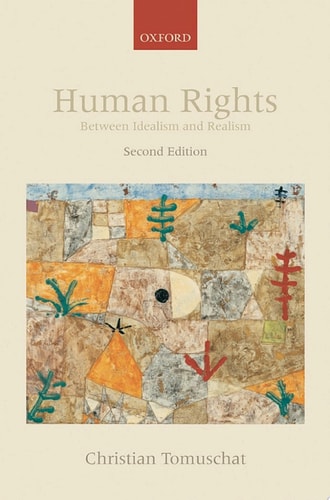
Human Rights: Between Idealism and Realism
0
0
As an Amazon Associate and affiliate partner, Menrva Books earns from qualifying purchases. Learn more
Author Description
Human Rights between Idealism and Realism presents human rights in action, focusing on their effectiveness as legal tools designed to benefit human beings. By combining conceptual analysis with an emphasis on procedures and mechanisms of implementation, this volume provides a multidimensional overview of human rights. After examining briefly the history of human rights, the author analyses the intellectual framework that forms the basis of their legitimacy. In particular, he covers the concept of universality and the widely used model that classifies human rights into clusters of different 'generations'. The volume then moves on to analyse of the activities of the political institutions of the United Nations, the expert bodies established by the relevant treaties, and the international tribunals specifically entrusted at the regional level with protecting human rights. The author explains how and why ithe classical array of politically inspired informal devices has been enriched by the addition of international criminal procedures and by endeavours to introduce civil suits against alleged individual violators of human rights. Finally, the volume is rounded off by a consideration of the importance of humanitarian law as an instrument for the protection of human life and dignity and an exploration of the future of human rights.
Menrva's Summary
THE THESIS
This volume investigates the practical effectiveness of human rights as legal instruments by balancing theoretical legitimacy against the realities of international implementation. Christian Tomuschat, a distinguished scholar in international law, utilizes his extensive academic background to evaluate how human rights function within global political and judicial systems. He argues that the efficacy of these rights depends on the interplay between established international norms and the procedural mechanisms designed to enforce them.
THE SCOPE MAP
What You Will Find
- Historical analysis of human rights development and conceptual legitimacy
- Examination of United Nations political institutions and treaty-based expert bodies
- Overview of regional international tribunals and criminal procedures
- Discussion on the role of humanitarian law in protecting human dignity
Scope Limits
- Does not provide an exhaustive case-by-case analysis of every international human rights violation
- Focuses primarily on institutional and legal frameworks rather than grassroots activism
THE AUTHORITY PERSPECTIVE
Experts recognize this text as a foundational resource for understanding the structural mechanisms of international human rights law. Readers frequently note the academic density of the prose, which makes it particularly suitable for students and practitioners of international law.
Page Count:
458
Publication Date:
2008-01-01
Publisher:
OUP Oxford
ISBN-10:
0191021482
ISBN-13:
9780191021480
Law
International Law
Human rights
Community Tags
Other Editions(6)


Similar Books




Reader Comments
Share Your Thoughts
No comments yet. Be the first to share your thoughts!