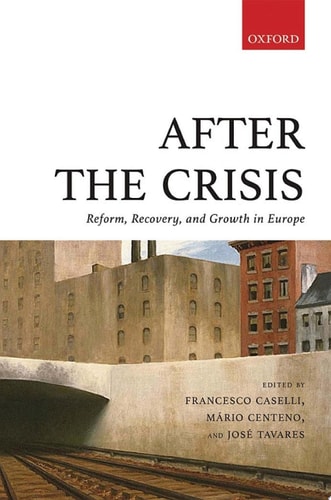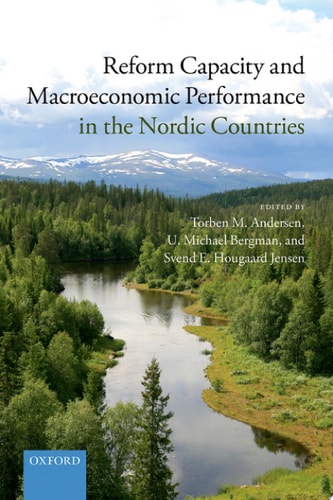
Reform Capacity and Macroeconomic Performance in the Nordic Countries
0
0
As an Amazon Associate and affiliate partner, Menrva Books earns from qualifying purchases. Learn more
Author Description
The outbreak of the financial crisis in 2008 has had significant effects on economic activity, unemployment, and public finances for all European countries. However, European economies do not form a homogenous region, and any serious analysis of macroeconomic imbalances in Europe must account for the fact that different economic and political models and circumstances operate across the continent. This book focuses on the Nordic countries (Denmark, Finland, Iceland, Norway, and Sweden) which have a relatively good record of undertaking fiscal and structural reforms after their own financial and debt crises in the 1980s and 1990s. The Nordic countries are small and open economies, well-known for their high income levels, high employment rates, organized labour markets, a relatively equal distribution of incomes, and large public sectors. From this perspective, the book asks whether there are lessons that might be learned from the Nordic economies. Is there a distinctive Nordic model that could be usefully followed, by other small open economies, in terms of fiscal and monetary policy design, labour market policies and reforms, and financial and housing market regulation? It is inappropriate to define the Nordic model in terms of a common set of policies. Since the key characteristics, including the overarching objectives and supporting institutions, have strong historical foundations, copying and pasting them to other countries is not easily done. Even though the Nordic experiences are not directly transferable, they may add new knowledge about the importance of institutional design, fiscal consolidation, and structural reforms not only for macroeconomic performance but also for how to preserve key objectives such as social balance and equity.
Menrva's Summary
THE THESIS
This book investigates whether the Nordic countries possess a distinctive, replicable economic model that can inform fiscal and structural policy design for other small, open economies. The authors, Torben M. Andersen, Michael Bergman, and Svend E. Hougaard Jensen, utilize historical data from Denmark, Finland, Iceland, Norway, and Sweden to analyze how these nations navigated financial crises in the 1980s and 1990s. They argue that while the Nordic model is not a uniform set of policies, its institutional design offers critical insights into balancing macroeconomic performance with social equity.
THE SCOPE MAP
What You Will Find
- Comparative analysis of fiscal and monetary policy frameworks across five Nordic nations.
- Examination of labor market structures and their role in economic resilience.
- Evaluation of financial and housing market regulatory responses to debt crises.
Scope Limits
- The text does not provide a universal 'copy-paste' manual for policy implementation in non-Nordic contexts.
- It does not offer a singular, monolithic definition of the Nordic model, acknowledging significant internal variations.
THE AUTHORITY PERSPECTIVE
Experts identify this work as a rigorous contribution to comparative political economy, noting its focus on the institutional foundations of Nordic success. Readers frequently highlight the academic density of the prose, which is intended for policy analysts and economists interested in structural reform.
Page Count:
368
Publication Date:
2015-01-01
Publisher:
OUP Oxford
ISBN-10:
0191026646
ISBN-13:
9780191026645
Economics
Principles of Macroeconomics
Nordic Studies
Macroeconomics
Public Policy
Community Tags
Similar Books