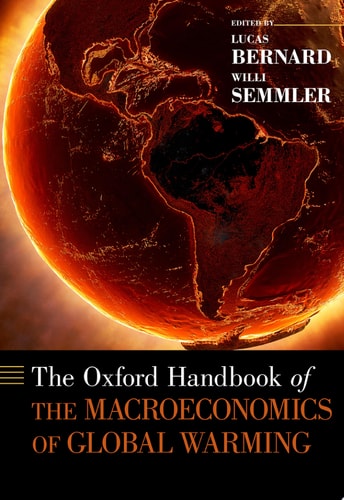
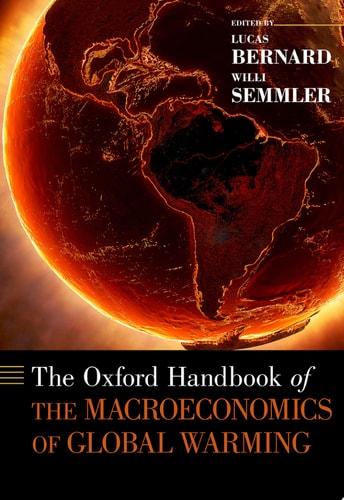
The Oxford Handbook of the Macroeconomics of Global Warming
0
0
As an Amazon Associate and affiliate partner, Menrva Books earns from qualifying purchases. Learn more
Author Description
The first World Climate Conference, which was sponsored by the World Meteorological Organization in Genève in 1979, triggered an international dialogue on global warming. From the 1997 United Nations-sponsored conference-during which the Kyoto Protocol was signed-through meetings in Copenhagen, Cancún, Durban, and most recently Doha (2012) and Warsaw (2013), worldwide attention to the issue of global warming and its impact on the world's economy has rapidly increased in intensity.The consensus of these debates and discussions, however, is less than clear. Optimistically, many geoscience researchers and members of the Intergovernmental Panel on Climate Change (IPCC) have supported CO2 emission reduction pledges while maintaining that a 2°C limit in increased temperature by the year 2100 is achievable through international coordination. Other observers postulate that established CO2 reduction commitments such as those agreed to at the Copenhagen United Nations Climate Change Conference (2009) are insufficient and cannot hold the global warming increase below 2°C. As experts theorize on precisely what impact global warming will have, developing nations have become particularly alarmed. The developed world will use energy to mitigate global warming effects, but developing countries are more exposed by geography and poverty to the most dangerous consequences of a global temperature rise and lack the economic means to adapt. The complex dynamics that result from this confluence of science and geopolitics gives rise to even more complicated issues for economists, financial planners, business leaders, and policy-makers.The Oxford Handbook of the Macroeconomics of Global Warming analyzes the economic impact of issues related to and resulting from global warming, specifically the implications of possible preventative measures, various policy changes, and adaptation efforts as well as the different consequences climate change will have on both developing and developed nations.
Menrva's Summary
THE THESIS
How can global economic frameworks effectively address the multifaceted challenges posed by climate change and the transition to a low-carbon economy? Editors Lucas Bernard and Willi Semmler compile contributions from leading experts to examine the intersection of climate science and macroeconomic policy. The text evaluates the economic consequences of temperature rise, the efficacy of various mitigation strategies, and the disparate impacts on developed versus developing nations. It provides a rigorous analytical framework for understanding the fiscal and structural adjustments required to navigate the climate crisis.
THE SCOPE MAP
What You Will Find
- Analysis of CO2 emission reduction pledges and international climate agreements.
- Economic modeling of climate change impacts on global markets.
- Comparative studies of adaptation strategies for developed and developing economies.
- Discussions on the role of financial planning and policy-making in climate mitigation.
Scope Limits
- Does not provide specific localized environmental engineering solutions.
- Does not focus on micro-level consumer behavior or individual lifestyle changes.
THE AUTHORITY PERSPECTIVE
Experts recognize this volume as a comprehensive reference for policy-makers and economists navigating the intersection of climate science and fiscal strategy. Readers frequently note the academic density of the prose, which is tailored for professionals and advanced students in the field of environmental economics.
Page Count:
720
Publication Date:
2014-01-01
Publisher:
Oxford University Press
ISBN-10:
0190204192
ISBN-13:
9780190204198
Economics
Macroeconomics
Climate Change
Public Policy
Principles of Macroeconomics
Community Tags
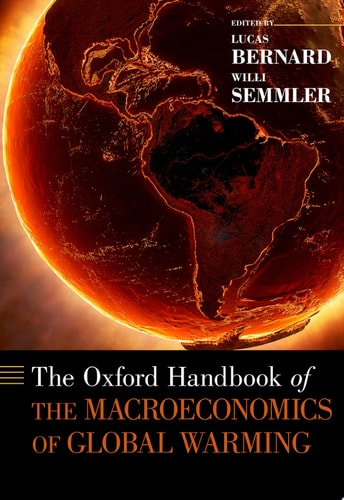
Other Editions(2)
Similar Books

Reader Comments
Share Your Thoughts
No comments yet. Be the first to share your thoughts!