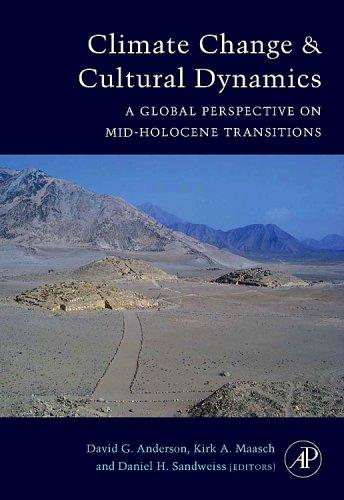
Climate Change and Cultural Dynamics
0
0
As an Amazon Associate and affiliate partner, Menrva Books earns from qualifying purchases. Learn more
Author Description
The Middle Holocene epoch (8,000 to 3,000 years ago) was a time of dramatic changes in the physical world and in human cultures. Across this span, climatic conditions changed rapidly, with cooling in the high to mid-latitudes and drying in the tropics. In many parts of the world, human groups became more complex, with early horticultural systems replaced by intensive agriculture and small-scale societies being replaced by larger, more hierarchial organizations. Climate Change and Cultural Dynamics explores the cause and effect relationship between climatic change and cultural transformations across the mid-Holocene (c. 4000 B.C.). * Explores the role of climatic change on the development of society around the world * Chapters detail diverse geographical regions * Co-written by noted archaeologists and paleoclimatologists for non-specialists.
Menrva's Summary
THE THESIS
This book investigates the intricate relationship between rapid climatic shifts and the evolution of human societies during the Middle Holocene epoch.
David G. Anderson, a noted archaeologist, and paleoclimatologists explore the period between 8,000 and 3,000 years ago, a time marked by significant global cooling and drying. The text examines how these environmental changes spurred cultural transformations, including the transition from early horticulture to intensive agriculture and the rise of more complex, hierarchical social structures. The book presents a global perspective, with dedicated chapters analyzing diverse geographical regions and their unique responses to these climatic pressures.
THE SCOPE MAP
- Analysis of climatic changes during the Middle Holocene (8,000 to 3,000 years ago), including cooling in high latitudes and drying in the tropics.
- Examination of cultural transformations, such as the shift from horticultural systems to intensive agriculture.
- Exploration of the replacement of small-scale societies with larger, more hierarchical organizations.
- Detailed case studies from diverse geographical regions across the globe.
- Insights from noted archaeologists and paleoclimatologists, presented for a non-specialist audience.
THE AUTHORITY PERSPECTIVE
The book is structured to explore the cause-and-effect relationship between climatic change and cultural transformations, suggesting a focus on empirical evidence and comparative analysis across different regions. Its co-authorship by archaeologists and paleoclimatologists indicates a multidisciplinary approach, likely resulting in a text that balances scientific data with anthropological interpretation. The stated aim to serve non-specialists implies an accessible presentation of complex topics, making it suitable for a broad audience interested in human history and environmental science.
Page Count:
604
Publication Date:
2007-01-01
ISBN-10:
0120883902
ISBN-13:
9780120883905
History
Non-Fiction
Sociology
Anthropology
Archaeology
Climate Change
Community Tags
Similar Books














