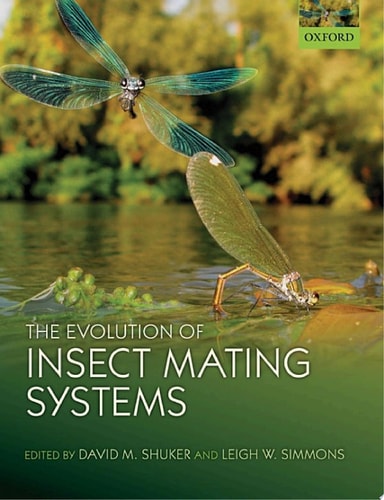
The Evolution of Insect Mating Systems
0
0
As an Amazon Associate and affiliate partner, Menrva Books earns from qualifying purchases. Learn more
Author Description
Insects display a staggering diversity of mating and social behaviours. Studying these systems provides insights into a wide range of evolutionary and behavioural questions, such as the evolution of sex, sexual selection, sexual conflict, and parental care. This edited volume provides an authoritative update of the landmark book in the field, The Evolution of Insect Mating Systems (Thornhill and Alcock, 1983), which had such a huge impact in shaping adaptationist approaches to the study of animal behaviour and influencing the study of the evolution of reproductive behaviour far beyond the taxonomic remit of insects. This accessible new volume brings the empirical and conceptual scope of the original book fully up to date, incorporating the wealth of new knowledge and research of the last 30 years. It explores the evolution of complex forms of sex determination in insects, and the role of sexual selection in shaping the evolution of mating systems. Selection arising via male contest competition and female choice (both before and after copulation) are discussed, as are the roles of parasites and pathogens in mediating the strength of sexual selection, and the role that parental care plays in successful reproduction. The Evolution of Insect Mating Systems is suitable for both graduate students and researchers interested in insect mating systems or behaviour from an evolutionary, genetical, physiological, or ecological perspective. Due to its interdisciplinary and concept-driven approach, it will also be of relevance and use to a broad audience of evolutionary biologists.
Menrva's Summary
THE THESIS
This volume investigates the mechanisms driving the diversity of insect mating and social behaviors through the lens of modern evolutionary theory. Editors David Shuker and Leigh W. Simmons synthesize three decades of empirical research to update the foundational framework established by Thornhill and Alcock in 1983. The text argues that insect reproductive strategies serve as a primary model for understanding broader concepts such as sexual selection, sexual conflict, and parental investment across the animal kingdom.
THE SCOPE MAP
What You Will Find
- Analysis of sex determination mechanisms in diverse insect taxa
- Examination of pre- and post-copulatory sexual selection, including male contest competition and female choice
- Discussion of the influence of parasites and pathogens on reproductive success
- Evaluation of parental care strategies and their evolutionary trade-offs
Scope Limits
- The text focuses primarily on insects, though it draws implications for general evolutionary biology
- It does not provide an exhaustive catalog of every known insect species, but rather focuses on conceptual frameworks and representative case studies
THE AUTHORITY PERSPECTIVE
Experts recognize this volume as a necessary update to a classic text, providing a comprehensive synthesis of contemporary research in behavioral ecology. Readers frequently note the academic density of the prose, which makes the book well-suited for graduate students and professional researchers in the biological sciences.
Page Count:
352
Publication Date:
2014-01-01
Publisher:
OUP Oxford
ISBN-10:
0191030880
ISBN-13:
9780191030888
Science
Evolutionary Biology
Behavioral Ecology
Entomology
Zoology
Biology
Community Tags
Similar Books