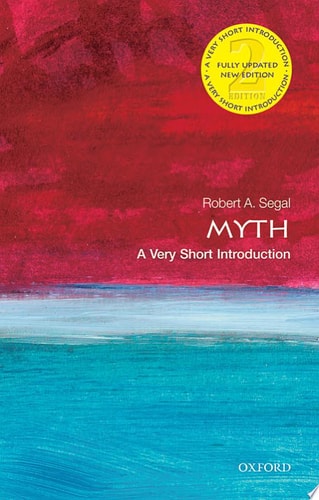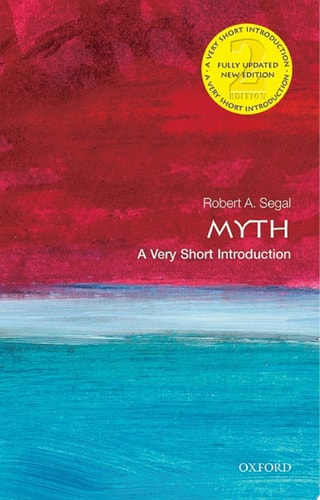
Myth: A Very Short Introduction
0
0
As an Amazon Associate and affiliate partner, Menrva Books earns from qualifying purchases. Learn more
Author Description
Where do myths come from? What is their function and what do they mean? In this Very Short Introduction Robert Segal introduces the array of approaches used to understand the study of myth. These approaches hail from disciplines as varied as anthropology, sociology, psychology, literary criticism, philosophy, science, and religious studies. Including ideas from theorists as varied as Sigmund Freud, Claude Lévi-Strauss, Albert Camus, and Roland Barthes, Segal uses the famous ancient myth of Adonis to analyse their individual approaches and theories. In this new edition, he not only considers the future study of myth, but also considers the interactions of myth theory with cognitive science, the implications of the myth of Gaia, and the differences between story-telling and myth. ABOUT THE SERIES: The Very Short Introductions series from Oxford University Press contains hundreds of titles in almost every subject area. These pocket-sized books are the perfect way to get ahead in a new subject quickly. Our expert authors combine facts, analysis, perspective, new ideas, and enthusiasm to make interesting and challenging topics highly readable.
Menrva's Summary
THE THESIS
This book investigates the fundamental nature, function, and meaning of myth by examining the diverse theoretical frameworks used to interpret it. Robert Segal, an expert in the study of religion and myth, synthesizes perspectives from anthropology, psychology, and philosophy to provide a comprehensive overview of how scholars analyze mythological narratives. By applying these various theories to the specific myth of Adonis, he demonstrates how different academic disciplines approach the same subject matter with distinct methodologies.
THE SCOPE MAP
What You Will Find
- Comparative analysis of major myth theorists including Freud, Lévi-Strauss, Camus, and Barthes
- Interdisciplinary approaches spanning sociology, cognitive science, and literary criticism
- Examination of the distinction between general storytelling and myth
- Discussion on the implications of modern myths like Gaia
Scope Limits
- Does not provide an exhaustive catalog of world mythologies
- Does not offer a single definitive interpretation of myth
THE AUTHORITY PERSPECTIVE
Experts and readers recognize this text as a concise, high-level introduction suitable for students and curious laypeople. The prose is noted for its academic clarity, effectively distilling complex theoretical debates into an accessible format for those new to the field of myth studies.
Page Count:
160
Publication Date:
2015-01-01
Publisher:
OUP Oxford
ISBN-10:
0191037699
ISBN-13:
9780191037696
Philosophy
Anthropology
Sociology
Mythology
Cultural Anthropology
Literary Criticism