Evidence-Based Policing: Translating Research into Practice
0
0
As an Amazon Associate and affiliate partner, Menrva Books earns from qualifying purchases. Learn more
Author Description
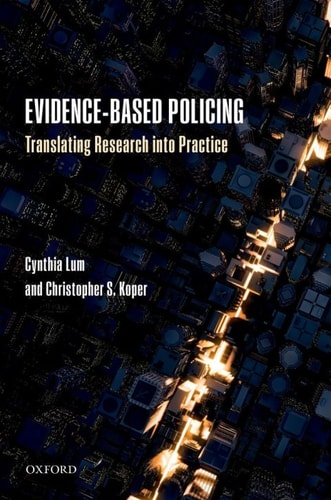
Today's police agencies are in a period of both crisis and reform as they try to improve their ability to deliver public safety to citizens in ways that are effective, legitimate, and sustainable. Evidence-based policing offers one such solution - an approach which emphasises the value that research can bring to police officers and, by extension, the public they serve. However, evidence-based policing is not just about the process of understanding and evaluating police practices. It is also about translating and using that knowledge in daily police activities. This unique book examines the scientific evidence for the effectiveness of various police practices and provides tools to help turn research into practice. Part I gives a practitioner's definition of evidence-based policing, a primer on how to judge and interpret research findings, and a review of the Evidence-Based Policing Matrix, a tool for translating research on police crime control interventions. In Part II the authors review the breadth of knowledge about policing interventions for people, places, communities, and technology, focusing on how to optimize operations based on this information. Tools and ideas that can assist in implementing evidence-based practices into patrol, investigations, supervision, management, crime analysis, and leadership are provided in Part III. Finally, in Part IV the authors speak to researchers about how they might continue to work with police agencies to advance evidence-based policing.
Menrva's Summary
THE THESIS
This book investigates how police agencies can effectively integrate scientific research into daily operational practices to improve public safety, legitimacy, and sustainability. Christopher S. Koper and Cynthia Lum, both established scholars in the field of criminology and policing, provide a framework for bridging the gap between academic research and field application. They argue that by utilizing systematic evidence, law enforcement can move beyond traditional methods toward more optimized, data-driven strategies for crime control and community engagement.
THE SCOPE MAP
What You Will Find
- A comprehensive review of the Evidence-Based Policing Matrix for evaluating interventions.
- Methodologies for interpreting research findings within a law enforcement context.
- Practical strategies for implementing evidence-based approaches in patrol, investigation, and leadership.
- Guidance for researchers on fostering collaborative partnerships with police agencies.
Scope Limits
- The text does not provide a historical account of policing evolution outside the context of evidence-based reform.
- It does not offer specific legal advice or policy templates for individual jurisdictions.
THE AUTHORITY PERSPECTIVE
Experts and practitioners frequently cite this work as a foundational text for understanding the practical application of criminological research in modern policing. Readers often note the clarity of the authors' framework, which successfully translates complex academic data into actionable tools for police management and leadership.
Page Count:
337
Publication Date:
2017-01-01
Publisher:
OUP Oxford
ISBN-10:
019103066X
ISBN-13:
9780191030666
Social Science
Professional Career & Trade
Public Policy
Sociology
Law Enforcement
Criminology
Community Tags
Similar Books