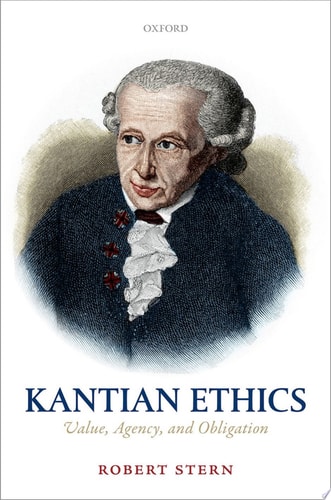
Kantian Ethics
0
0
As an Amazon Associate and affiliate partner, Menrva Books earns from qualifying purchases. Learn more
Author Description
This Volume Presents A Selection Of Robert Stern's Work On The Theme Of Kantian Ethics. It Begins By Focusing On The Relation Between Kant's Account Of Obligation And His View Of Autonomy, Arguing That This Leaves Room For Kant To Be A Realist About Value. Stern Then Considers Where This Places Kant In Relation To The Question Of Moral Scepticism, And In Relation To The Principle Of 'ought Implies Can', And Examines This Principle In Its Own Right. The Papers Then Move Beyond Kant Himself To His Wider Influence And To Critics Of His Work, Including Hegel, The British Idealists, And The Danish Philosopher And Theologian K. E. Løgstrup, While Also Offering A Comparison With William James's Arguments For Freedom. The Collection Concludes With A Consideration Of A Broadly Kantian Critique Of Divine Command Ethics Offered By Stephen Darwall, Arguing That The Critique Does Not Succeed. General Themes Considered In This Volume Therefore Include Value, Perfectionism, Agency, Autonomy, Moral Motivation, Moral Scepticism, And Obligation, As Well As The Historical Place Of Kant's Ethics And Its Influence On Thinkers Up To The Present Day.
Menrva's Summary
THE THESIS
This volume investigates the coherence of Kantian ethics by examining the intersection of obligation, autonomy, and moral realism. Robert Stern, a scholar of Kantian and post-Kantian philosophy, utilizes a series of analytical papers to evaluate how Kant’s moral framework addresses skepticism and the principle of 'ought implies can.' The work systematically bridges the gap between Kant’s original formulations and the subsequent interpretations provided by figures such as Hegel, the British Idealists, and William James.
THE SCOPE MAP
What You Will Find
- Analysis of the relationship between Kantian autonomy and value realism
- Critical examination of the 'ought implies can' principle
- Comparative studies involving Hegel, K. E. Løgstrup, and William James
- Evaluation of Stephen Darwall’s critique of divine command ethics
Scope Limits
- The text does not provide a comprehensive introduction to Kant’s entire philosophical system
- It focuses primarily on specific debates within moral philosophy rather than a general overview of Kantian metaphysics
THE AUTHORITY PERSPECTIVE
Scholars and students of moral philosophy frequently cite this collection as a rigorous resource for understanding the nuances of Kantian obligation and its historical reception. Experts highlight the text for its technical precision and its utility in navigating complex debates regarding moral agency and perfectionism.
Page Count:
320
Publication Date:
2015-01-01
Publisher:
Oup Oxford
ISBN-10:
0191033650
ISBN-13:
9780191033650
Philosophy
Kant
Moral Philosophy
Ethics
Philosophy history
Community Tags
Similar Books