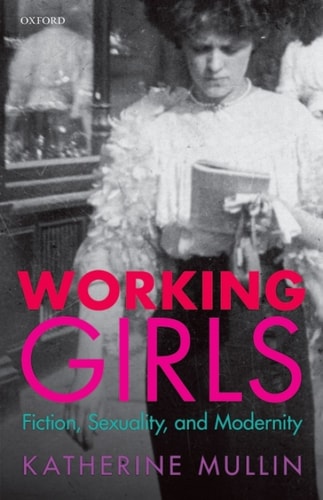
Working Girls: Fiction, Sexuality, and Modernity
0
0
As an Amazon Associate and affiliate partner, Menrva Books earns from qualifying purchases. Learn more
Author Description
Working Girls: Fiction, Sexuality, and Modernity investigates the significance of a new form of sexual identity at the end of the nineteenth and beginning of the twentieth century. Young women of the lower-middle and working classes were increasingly abandoning domestic service in favour of occupations of contested propriety. They inspired both moral unease and erotic fascination. Working Girls considers representations of four highly glamorised yet controversial types of women worker: telegraphists and typists (in newly-feminised offices), shop assistants (in the new department stores), and barmaids (in the new 'gin palaces' of major British cities). Economically emancipated (more or less) and liberated (more or less) from the protection and constraints of home and family, shop-girls, barmaids, typists, and telegraphists became mass media sensations. They energised a wide range of late-Victorian and Modernist fiction. This study will bring late-Victorian and Modernist British writers into intimate conversation with a substantial new archive of ephemeral sources often regarded as remote from high art and its concerns: popular fiction; music hall and musical comedy; beauty pageants and fairground exhibitions; visual art and early film; careers manuals; magazine and periodical journalism; moral reform crusades, Royal Commissions, and attempts at protective legislation. Working Girls argues that these seductive yet perilous young women helped writers negotiate anxieties about the state of literary culture in the United Kingdom. Crucially, they preoccupy novelists who were themselves beleaguered by anxieties over cultural capital, the shifting pressures of the literary marketplace, or controversies about the morality of fiction (often leading to the threat of censorship). In articulating questions about sexual integrity, Working Girls articulate often submerged questions about textual integrity and the role of the modern novel.
Menrva's Summary
THE THESIS
This study investigates how the emergence of the 'working girl' as a cultural figure at the turn of the twentieth century influenced the development and thematic concerns of British literature. Katherine Mullin, a scholar of Victorian and Modernist literature, utilizes a diverse archive of ephemeral sources and canonical texts to argue that these women workers served as a focal point for authors navigating anxieties regarding sexual morality, cultural capital, and the shifting nature of the literary marketplace. By examining the intersection of gender, labor, and textuality, the author demonstrates how the figure of the shop-girl, typist, or barmaid became central to the evolution of the modern novel.
THE SCOPE MAP
What You Will Find
- Analysis of four specific labor categories: telegraphists, typists, shop assistants, and barmaids.
- Examination of the relationship between high-art fiction and popular media forms like music hall, early film, and journalism.
- Exploration of the connection between sexual integrity and textual integrity in the works of late-Victorian and Modernist authors.
Scope Limits
- The study focuses primarily on British literature and culture, excluding comparative analysis of continental European or American developments.
- The research does not provide a comprehensive history of labor laws, focusing instead on their representation in cultural and literary discourse.
THE AUTHORITY PERSPECTIVE
Scholars and critics recognize this work as a significant contribution to the study of gender and labor in British literary history. Readers frequently note the academic density of the prose and the breadth of the archival research, which effectively bridges the gap between popular culture and canonical literature.
Page Count:
288
Publication Date:
2016-01-01
Publisher:
OUP Oxford
ISBN-10:
0191037834
ISBN-13:
9780191037832
English & College Success
Modernism
English
Victorian
British History
In literature
Gender Studies
Literary Criticism
Community Tags
Similar Books