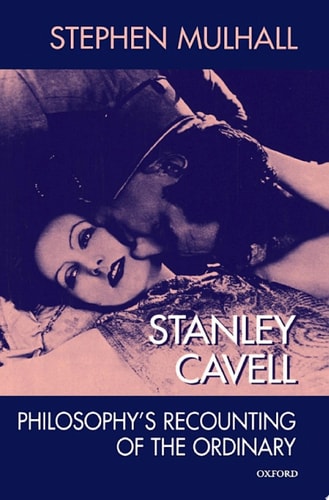
Stanley Cavell: Philosophy's Recounting of the Ordinary
0
0
As an Amazon Associate and affiliate partner, Menrva Books earns from qualifying purchases. Learn more
Author Description
Stephen Mulhall presents the first full-length philosophical study of the work of Stanley Cavell, best known for his highly influential contributions to the fields of film studies, Shakespearian literary criticism, and the confluence of psychoanalysis and literary theory. It is not properly appreciated that Cavell's project originated in his interpretation of Austin's and Wittgenstein's philosophical interest in the criteria governing ordinary language, and is given unity by an abiding concern with the nature and the varying cultural manifestations of the sceptical impulse in modernity. This book elucidates the essentially philosophical roots and trajectory of Cavell's work, traces its links with Romanticism and its recent turn towards a species of moral pefectionism associated with Thoreau and Emerson, and concludes with an assessment of its relations to liberal-democratic political theory, Christian religious thought, and feminist literary studies. It will be of interest to anyone concerned with the relationships between Anglo-American and Continental philosophy, and between philosophy and other disciplines in the humanities.
Menrva's Summary
THE THESIS
This book investigates the philosophical foundations and thematic unity of Stanley Cavell's diverse body of work, arguing that his project is anchored in the interpretation of ordinary language philosophy. Stephen Mulhall, a scholar of contemporary philosophy, utilizes a rigorous analytical framework to trace Cavell's intellectual trajectory from his engagement with Austin and Wittgenstein to his later focus on Romanticism and moral perfectionism. By examining these roots, the author demonstrates how Cavell's skepticism regarding modernity provides a coherent structure to his contributions across film studies, literature, and political theory.
THE SCOPE MAP
What You Will Find
- An analysis of Cavell's engagement with J.L. Austin and Ludwig Wittgenstein.
- An exploration of the intersection between philosophy, Romanticism, and moral perfectionism.
- A synthesis of Cavell's influence on film studies, Shakespearean criticism, and political theory.
Scope Limits
- The text focuses primarily on the philosophical underpinnings of Cavell's work rather than providing a biographical account of his life.
- It does not attempt to provide an exhaustive critique of every individual film or literary text Cavell analyzed, but rather focuses on the methodology of his approach.
THE AUTHORITY PERSPECTIVE
Experts and critics frequently highlight this work as a foundational text for those seeking to understand the coherence and depth of Stanley Cavell's complex writings. Readers often note the academic density of the prose, which is praised for its ability to clarify the subtleties of Cavell's thought while remaining eloquent and precise.
Page Count:
382
Publication Date:
1999-01-01
Publisher:
Clarendon Press
ISBN-10:
0191036978
ISBN-13:
9780191036972
History
Non-Fiction
Politics
Philosophy
Literary Criticism
Movies
Categories
Kindle eBooks
Kindle Store
Motion pictures
Intellectual History
Literature
Psychoanalysis philosophy
Community Tags
Similar Books