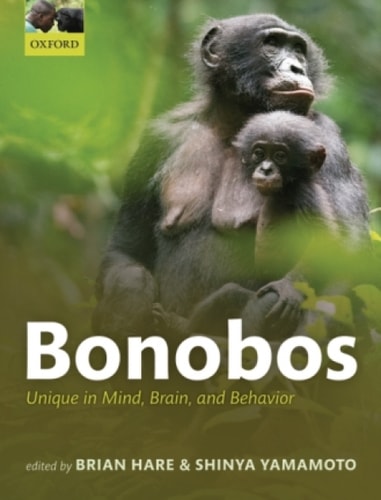
Bonobos: Unique in Mind, Brain, and Behavior
0
0
As an Amazon Associate and affiliate partner, Menrva Books earns from qualifying purchases. Learn more
Author Description
The bonobo, along with the chimpanzee, is one of our two closest living relatives. Their relatively narrow geographic range (south of the Congo River in the Democratic Republic of Congo) combined with the history of political instability in the region, has made their scientific study extremely difficult. In contrast, there are dozens of wild and captive sites where research has been conducted for decades with chimpanzees. Because data sets on bonobos have been so hard to obtain and so few large-scale studies have been published, the majority of researchers have treated chimpanzee data as being representative of both species. However, this misconception is now rapidly changing. With relative stability in the DRC for over a decade and a growing community of bonobos living in zoos and sanctuaries internationally, there has been an explosion of scientific interest in the bonobo with dozens of high impact publications focusing on this fascinating species. This research has revealed exactly how unique bonobos are in their brains and behavior, and reminds us why it is so important that we redouble our efforts to protect the few remaining wild populations of this iconic and highly endangered great ape species.
Menrva's Summary
THE THESIS
This book investigates the distinct evolutionary, neurological, and behavioral differences that separate bonobos from their close relative, the chimpanzee. Authors Brian Hare and Shinya Yamamoto synthesize recent scientific data to challenge the long-standing academic assumption that chimpanzee behavior can serve as a proxy for understanding all great apes. By highlighting new research enabled by increased access to wild and captive populations, the authors argue that bonobos possess unique cognitive and social traits that require independent study and urgent conservation efforts.
THE SCOPE MAP
What You Will Find
- Comparative analysis of bonobo and chimpanzee neurobiology
- Behavioral studies regarding social structure and conflict resolution
- Data derived from both wild populations in the Democratic Republic of Congo and international captive sanctuaries
Scope Limits
- Does not provide a comprehensive history of all great ape species
- Does not serve as a general field guide for all primates
THE AUTHORITY PERSPECTIVE
Experts recognize this work as a critical update to primatology, effectively correcting the historical bias toward chimpanzee-centric research. Readers frequently note that the text provides a necessary, data-driven foundation for understanding the specific evolutionary path of the bonobo.
Page Count:
384
Publication Date:
2017-01-01
Publisher:
OUP Oxford
ISBN-10:
0191044202
ISBN-13:
9780191044205
Science
Nature
Zoology
Biology
Primatology
Chimpanzees
Anthropology
Community Tags
Similar Books