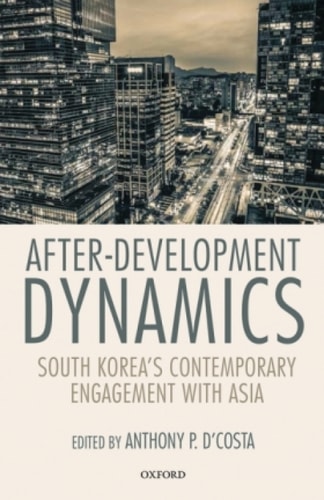
After-Development Dynamics: South Korea's Contemporary Engagement with Asia
0
0
As an Amazon Associate and affiliate partner, Menrva Books earns from qualifying purchases. Learn more
Author Description
The South Korean economic development trajectory has been widely studied and is well understood. From an impoverished war-torn nation, the country has progressed on all fronts, including a ten-fold increase in per capita income over a 40 year period. It stands out internationally when it comes to education and politically it has moved away from authoritarianism to a more spirited democratic system. In short, it seems to have achieved it all. The question then is, what does a country do after it has attained development? This volume examines Korea's strategic engagement with Asia as a response to the limits of the home market. Access to new markets and resources in Asia through exports and foreign investment are critical. Additionally, with Korea's ongoing demographic crisis, its engagement with foreign workers is also inevitable. After-Development Dynamics explores how Korea is responding through regional integration, strategic industrial upgrading of exports, foreign markets and resources, and coping with migrants, including unskilled workers, students, and professionals. The transfer of Korean business and employment practices through investment to other countries and accommodating foreigners is not trouble-free. Further, prosperity imposes demands for increased social welfare, while the workings of contemporary global capitalism introduce new sources of inequality. Sharing that prosperity with small firms, irregular workers, and women becomes critical. This volume presents the key internal challenges facing Korean society and suggests multiple ways to address them as a related response to Korea's after-development prosperity.
Menrva's Summary
THE THESIS
This volume investigates how South Korea manages the complex socio-economic challenges that emerge after achieving rapid national development. Anthony P. D'Costa, a scholar specializing in development and political economy, utilizes historical data and contemporary economic analysis to argue that Korea's future stability depends on its strategic integration with Asian markets and its ability to address internal social inequalities. The text provides a framework for understanding how a nation transitions from a growth-focused model to one that must balance global capitalism with domestic welfare demands.
THE SCOPE MAP
What You Will Find
- Analysis of South Korea's regional integration strategies within Asia.
- Examination of industrial upgrading and foreign investment policies.
- Discussion of demographic shifts and the integration of foreign labor.
- Evaluation of internal social welfare gaps affecting small firms and marginalized groups.
Scope Limits
- The text focuses primarily on the post-development phase rather than the historical origins of the Korean economic miracle.
- It does not provide a comprehensive history of Korean political parties or specific electoral outcomes.
THE AUTHORITY PERSPECTIVE
Experts recognize this work as a significant contribution to the study of East Asian political economy and the specific challenges of post-industrialized nations. Readers frequently note the academic density of the prose, which makes it a suitable resource for researchers and students of international development.
Page Count:
312
Publication Date:
2015-01-01
Publisher:
OUP Oxford
ISBN-10:
019104573X
ISBN-13:
9780191045738
Economics
Sociology
International relations
South Korea
Community Tags
Similar Books