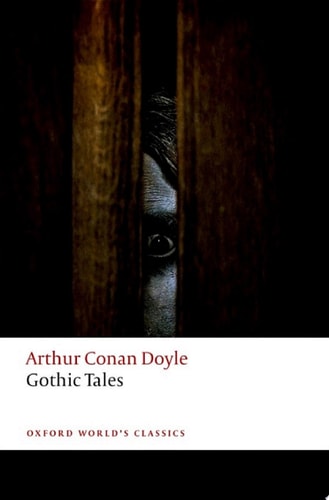
Gothic Tales
0
0
As an Amazon Associate and affiliate partner, Menrva Books earns from qualifying purchases. Learn more
Author Description
'There was a rumour, too, that he was a devil-worshipper, or something of that sort, and also that he had the evil eye...' Arthur Conan Doyle was the greatest genre writer Britain has ever produced. Throughout a long writing career, he drew on his own medical background, his travels, and his increasing interest in spiritualism and the occult to produce a spectacular array of Gothic Tales. Many of Doyle's writings are recognised as the very greatest tales of terror. They range from hauntings in the polar wasteland to evil surgeons and malevolent jungle landscapes. This collection brings together over thirty of Conan Doyle's best Gothic Tales. Darryl Jones's introduction discusses the contradictions in Conan Doyle's very public life - as a medical doctor who became obsessed with the spirit world, or a British imperialist drawn to support Irish Home Rule - and shows the ways in which these found articulation in that most anxious of all literary forms, the Gothic.
Menrva's Summary
THE PULSE
Arthur Conan Doyle explores the boundaries of the rational world through a series of encounters with the supernatural, the macabre, and the unexplained. The protagonist in each narrative often serves as a witness to forces that defy medical or scientific explanation, ranging from isolated polar expeditions to colonial outposts. These characters must navigate environments where the physical laws of the Victorian era collide with occult phenomena or psychological disintegration. The narrative framework shifts between first-person accounts of terror and third-person observations of moral decay, reflecting the author's own internal conflicts between empirical science and spiritualism.
INSIDE THE PAGES
- Atmospheric descriptions of desolate and claustrophobic settings
- Integration of medical and scientific terminology to ground the supernatural
- Exploration of the 'evil eye' and other folk superstitions
- Focus on the psychological toll of isolation and obsession
- Inclusion of colonial and imperialist anxieties common to the era
- Use of the epistolary and testimonial narrative styles
- Themes of moral transgression and the consequences of hubris
- Pacing that emphasizes slow-building dread over immediate action
THE COLLECTIVE ECHO
Readers and critics frequently highlight the contrast between Doyle's clinical, precise prose and the irrational nature of the horrors he depicts. Discussion often centers on how his background as a physician informs the anatomical detail present in his more gruesome scenes. Many observers note that the collection effectively captures the anxieties of the late Victorian period, particularly regarding the limits of human knowledge. The pacing is often described as deliberate, allowing the atmosphere to thicken before the inevitable confrontation with the unknown. This collection remains a primary reference point for those interested in the evolution of the Gothic genre within the British literary tradition.
Page Count:
586
Publication Date:
2016-01-01
Publisher:
OUP Oxford
ISBN-10:
0191053635
ISBN-13:
9780191053634
Horror
English & College Success
Victorian
Gothic
Supernatural
English literature
Classic Literature
English
Short Stories
Community Tags
Other Editions(3)
Similar Books