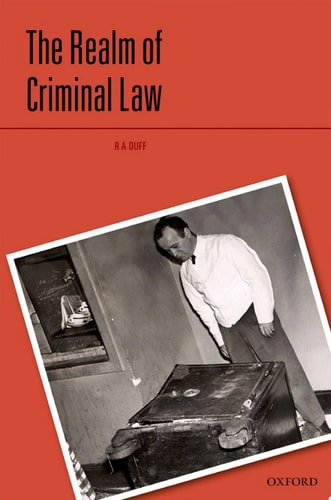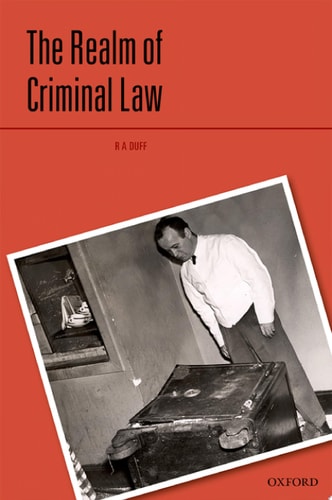
The Realm of Criminal Law
0
0
As an Amazon Associate and affiliate partner, Menrva Books earns from qualifying purchases. Learn more
Author Description
We Are Said To Face A Crisis Of Over-criminalization: Our Criminal Law Has Become Chaotic, Unprincipled, And Over-expansive. This Book Proposes A Normative Theory Of Criminal Law, And Of Criminalization, That Shows How Criminal Law Could Be Ordered, Principled, And Restrained. The Theory Is Based On An Account Of Criminal Law As A Distinctive Legal Practice That Functions To Declare And Define A Set Of Public Wrongs, And To Call To Formal Public Account Those Who Commit Such Wrongs; An Account Of The Role That Such Practice Can Play In A Democratic Republic Of Free And Equal Citizens; And An Account Of The Central Features Of Such A Political Community, And Of The Way In Which It Constitutes Its Public Realm-its Civil Order. Criminal Law Plays An Important, But Limited, Role In Such A Political Community In Protecting, But Also Partly Constituting, Its Civil Order. On The Basis Of This Account, We Can See How Such A Political Community Will Decide What Kinds Of Conduct Should Be Criminalized - Not By Applying One Or More Of The Substantive Master Principles That Theorists Have Offered, But By Considering Which Kinds Of Conduct Fall Within Its Public Realm (as Distinct From The Private Realms That Are Not The Polity's Business), And Which Kinds Of Wrong Within That Realm Require This Distinctive Kind Of Response (rather Than One Of The Other Kinds Of Available Response). The Outcome Of Such A Deliberative Process Will Probably Be A More Limited, And A More Rational And Principled, Criminal Law.
Menrva's Summary
THE THESIS
This book investigates the normative foundations of criminal law to address the contemporary crisis of over-criminalization. R.A. Duff, a prominent legal philosopher, argues that criminal law should be viewed as a distinctive practice for identifying public wrongs and holding individuals accountable within a democratic society. By grounding the law in the political community's civil order, the author proposes a framework that emphasizes restraint and principled deliberation over the application of rigid substantive principles.
THE SCOPE MAP
What You Will Find
- A normative theory of criminalization based on democratic citizenship
- A distinction between public realms and private spheres in legal regulation
- A deliberative process for determining which conduct warrants criminal sanction
Scope Limits
- The text does not provide a comprehensive survey of specific international criminal statutes
- It does not offer a practical manual for trial advocacy or courtroom procedure
THE AUTHORITY PERSPECTIVE
Legal scholars frequently cite this work as a significant contribution to the philosophy of criminal law, noting its rigorous analytical approach to the limits of state power. Experts highlight the text as a foundational resource for those studying the intersection of political theory and jurisprudence.
Page Count:
373
Publication Date:
2018-01-01
Publisher:
Oxford University Press
ISBN-10:
0191058572
ISBN-13:
9780191058578
Law
Jurisprudence
Criminal Law
Legal Theory
Political Philosophy