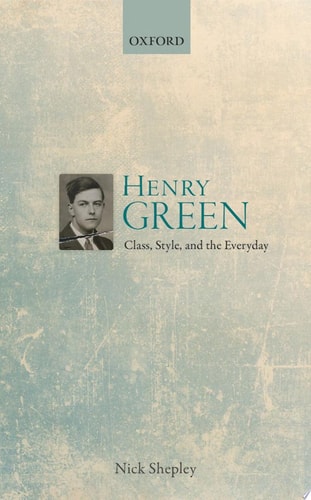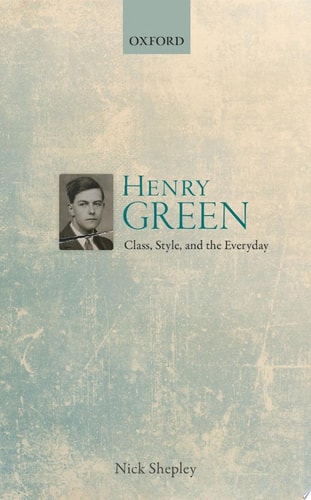
Henry Green: Class, Style, and the Everyday
0
0
As an Amazon Associate and affiliate partner, Menrva Books earns from qualifying purchases. Learn more
Author Description
Henry Green: Class, Style, And The Everyday Offers A Critical Prism Through Which Green's Fiction—from His Earliest Published Short Stories, As An Eton Schoolboy, Through To His Last Dialogic Novels Of The 1950s—can Be Seen As A Coherent, Subtle, And Humorous Critique Of The Tension Between Class, Style, And Realism In The First Half Of The Twentieth Century. The Study Extends On-going Critical Recognition That Green's Work Is Central To The Development Of The Novel From The Twenties To The Fifties, Acting As A Vital Bridge Between Late Modernist, Inter-war, Post-war, And Postmodernist Fiction. The Overarching Contention Is That The Shifting And Destabilizing Nature Of Green's Oeuvre Sets Up A Predicament Similar To That Confronted By Theorists Of The Everyday. Consequently, Each Chapter Acknowledges The Indeterminacy Of The Writing, Whether It Be: The Non-singular Functioning (or Malfunctioning) Of The Name; The Open-ended, Purposefully Ambiguous Nature Of Its Symbols; The Shifting, Cinematic Nature Of Green's Prose Style; The Sensitive, But Resolutely Unsentimental Depictions Of The Working-classes And The Aristocracy In The Inter-war Period; The Impact Of War And Its Inconsistent Irruptions Into Daily Life; Or The Ways In Which Moments Or Events Are Rapidly Subsumed Back Into The Flux Of The Everyday, Their Impact Left Uncertain. Critics Have, Historically, Offered Up Singular Readings Of Green's Work, Or Focused On The Poetic Or Recreative Qualities Of Certain Works, Particularly Those Of The 1940s. Green's Writing Is, Undoubtedly, Poetic And Extraordinary, But This Book Also Pays Attention To The Clichéd, Meta-textual, And Uneventful Aspects Of His Fiction.
Menrva's Summary
THE THESIS
This study investigates how Henry Green’s body of work functions as a critical bridge between late Modernist and Postmodernist fiction, specifically examining the tension between class, style, and realism. Nick Shepley utilizes a comprehensive analysis of Green’s entire oeuvre—from early short stories to his final 1950s novels—to argue that the author’s writing consistently destabilizes traditional narrative structures. By applying the lens of 'everyday' theory, Shepley demonstrates how Green’s prose navigates the complexities of social stratification and the ambiguity of daily life in the mid-twentieth century.
THE SCOPE MAP
What You Will Find
- A chronological examination of Henry Green’s novels and short stories from the 1920s through the 1950s.
- An analysis of the intersection between social class, linguistic style, and literary realism.
- A theoretical framework applying concepts of the 'everyday' to literary indeterminacy.
Scope Limits
- The study does not provide a traditional biographical account of Green’s personal life outside of his literary development.
- It does not focus on the author’s post-1950s life or later critical reception beyond the immediate scope of his published novels.
THE AUTHORITY PERSPECTIVE
Experts recognize this work as a significant contribution to the study of mid-century British literature, particularly for its departure from singular, thematic readings of Green’s prose. Readers frequently note the academic density of the text, which serves as a rigorous resource for scholars interested in the evolution of the novel during the inter-war and post-war periods.
Page Count:
208
Publication Date:
2016-01-01
Publisher:
Oxford University Press
ISBN-10:
0191053872
ISBN-13:
9780191053870
Biography
Literary Criticism
Literary theory
Modernism
British literature