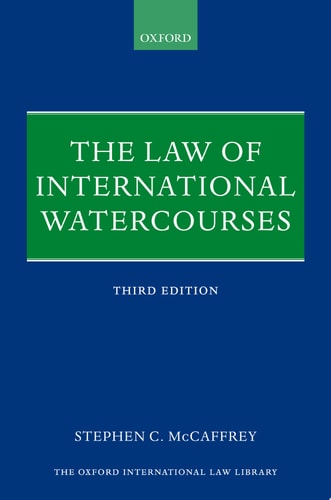
The Law of International Watercourses
0
0
As an Amazon Associate and affiliate partner, Menrva Books earns from qualifying purchases. Learn more
Author Description
The Law Of International Watercourses Is An Authoritative Guide To The Rules Of International Law Governing The Navigational And Non-navigational Uses Of International Rivers, Lakes, And Groundwater. The Continued Growth Of The World's Population Places Increasing Demands On Earth's Finite Supplies Of Fresh Water. Because Two Or More States Share Many Of The World's Most Important Drainage Basins - Including The Danube, The Ganges, The Indus, The Jordan, The Mekong, The Nile, The Rhine And The Tigris-euphrates - Competition For Increasingly Scarce Fresh Water Resources Will Only Increase. Agreements Between The States Sharing International Watercourses Are Negotiated, And Disputes Over Shared Water Are Resolved, Against The Backdrop Of The Rules Of International Law Governing The Use Of This Precious Resource. The Basic Legal Rules Governing The Use Of Shared Freshwater For Purposes Other Than Navigation Are Reflected In The 1997 Un Convention On The Law Of The Non-navigational Uses Of International Watercourses. This Book Devotes A Chapter To The 1997 Convention But Also Examines The Factual And Legal Context In Which The Convention Should Be Understood, Considers The More Important Rules Of The Convention In Some Depth, And Discusses Specific Issues That Could Not Be Addressed In A Framework Instrument Of That Kind. The Book Reviews The Major Cases And Controversies Concerning International Watercourses As A Background Against Which To Consider The Basic Substantive And Procedural Rights And Obligations Of States In The Field. The Third Edition Covers The Implications Of The 1997 Convention Coming Into Force In August 2014, And The Compatibility Of The 1997 And 1992 Conventions. This Edition Also Updates The Entire Book, Adds New Material To Many Of The Chapters, And Adds A Number Of New Case Studies, Including Pulp Mills On The River Uruguay (argentina V. Uruguay) And Certain Activities Carried Out By Nicaragua In The Border Area (costa Rica V. Nicaragua), Amongs
Menrva's Summary
THE THESIS
This work investigates the legal framework and customary rules governing the equitable utilization and management of international watercourses shared by multiple sovereign states. Stephen C. McCaffrey, a distinguished scholar and practitioner in international law, utilizes his extensive experience with the International Law Commission to synthesize complex legal precedents and treaty obligations. The text argues that as global water scarcity intensifies, the application of established international legal principles is critical for preventing conflict and ensuring sustainable resource management among riparian nations.
THE SCOPE MAP
What You Will Find
- Analysis of the 1997 UN Convention on the Law of the Non-navigational Uses of International Watercourses.
- Examination of substantive and procedural rights of states regarding shared freshwater resources.
- Case studies including the Pulp Mills on the River Uruguay and border disputes between Nicaragua and Costa Rica.
- Comparative analysis of the 1997 and 1992 international water conventions.
Scope Limits
- The text focuses primarily on legal and procedural frameworks rather than technical engineering or hydrological data.
- It does not provide an exhaustive history of every minor transboundary water dispute globally.
THE AUTHORITY PERSPECTIVE
Legal scholars and practitioners consistently identify this text as a foundational resource for understanding the complexities of transboundary water law. Readers frequently note the academic density of the prose, which is balanced by the author's clear articulation of intricate international legal doctrines.
Page Count:
687
Publication Date:
2019-01-01
Publisher:
Oxford University Press
ISBN-10:
0191056723
ISBN-13:
9780191056727
Law
Geography
International Law
Water Resources
Community Tags
Other Editions(3)
Similar Books




![The Remoter rural areas of Britain: [a symposium held at the University of Newcastle upon Tyne, 1970];](https://storage.googleapis.com/menrva_img_storage/covers/9780050024713.jpg)
Reader Comments
Share Your Thoughts
No comments yet. Be the first to share your thoughts!