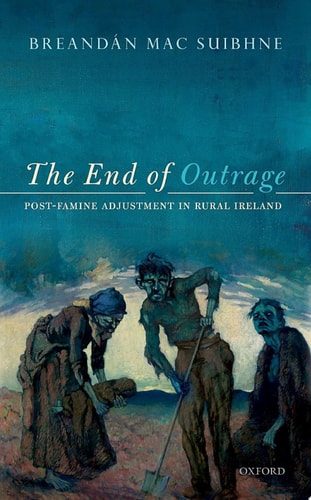
The End Of Outrage
0
0
As an Amazon Associate and affiliate partner, Menrva Books earns from qualifying purchases. Learn more
Author Description
South-west Donegal, Ireland, June 1856. From The Time That The Blight First Came On The Potatoes In 1845, Armed And Masked Men Dubbed Molly Maguires Had Been Raiding The Houses Of People Deemed To Be Taking Advantage Of The Rural Poor. On Some Occasions, They Represented Themselves As 'molly's Sons', Sent By Their Mother, To Carry Out Justice; On Others, A Man Attired As A Woman, Introducing 'herself' As Molly Maguire, Demanding Redress For Wrongs Inflicted On Her Children. The Raiders Might Stipulate The Maximum Price At Which Provisions Were To Be Sold, Warn Against The Eviction Of Tenants, Or Demand That An Evicted Family Be Reinstated To Their Holding. People Who Refused To Meet Their Demands Were Often Viciously Beaten And, In Some Instances, Killed — Offences That The Constabulary Classified As 'outrages'. Catholic Clergymen Regularly Denounced The Mollies And In 1853, The District Was Proclaimed Under The Crime And Outrage (ireland) Act. Yet The 'outrages' Continued. Then, In 1856, Patrick Mcglynn, A Young Schoolmaster, Suddenly Turned Informer On The Mollies, Precipitating Dozens Of Arrests. Here, A History Of Mcglynn's Informing, Backlit By Episodes Over The Previous Two Decades, Sheds Light On That Wave Of Outrage, Its Origins And Outcomes, The Meaning And The Memory Of It. More Specifically, It Illuminates The End Of 'outrage' — The Shifting Objectives Of Those Who Engaged In It, And Also How, After Hunger Faded And Disease Abated, Tensions Emerged In The Molly Maguires, When One Element Sought To Curtail Such Activity, While Another Sought, Unsuccessfully, To Expand It. And In That Contention, When The Opportunities Of Post-famine Society Were Coming Into View, One Glimpses The End, Or At Least An Ebbing, Of Outrage — In The Everyday Sense Of Moral Indignation — At The Fate Of The Rural Poor. But, At Heart, The End Of Outrage Is About Contention Among Neighbours — A Family That Rose From The Ashes Of A Mode Of Living, Those Consumed In The Conflagration,
Menrva's Summary
THE THESIS
This book investigates the collapse of the Molly Maguire secret society in 1850s Donegal and the broader social transformation of post-Famine Ireland. Breandán Mac Suibhne, a historian specializing in Irish social history, utilizes the testimony of informer Patrick McGlynn to reconstruct the internal dynamics of rural resistance. The work argues that the decline of these agrarian outrages reflects a fundamental shift in community values and the emergence of new economic opportunities following the Great Famine.
THE SCOPE MAP
What You Will Find
- Detailed analysis of the 1856 Molly Maguire crackdown in south-west Donegal.
- Examination of the role of the Crime and Outrage (Ireland) Act in rural policing.
- Reconstruction of the social tensions between neighbors and the shifting moral landscape of the mid-19th century.
Scope Limits
- The study is geographically confined to south-west Donegal and does not provide a comprehensive national history of the Molly Maguires.
- It focuses primarily on the mid-1850s, providing less detail on the later diaspora of these groups to North America.
THE AUTHORITY PERSPECTIVE
Historians recognize this work as a meticulous micro-history that challenges simplified narratives of Irish agrarian unrest. Readers frequently note the academic density of the prose, which rewards those interested in the granular social mechanics of 19th-century rural communities.
Page Count:
320
Publication Date:
2017-01-01
Publisher:
Oxford University Press
ISBN-10:
0191058637
ISBN-13:
9780191058639
True Crime
History
Famine Studies
19th Century
Irish History
Social History
Community Tags
Similar Books