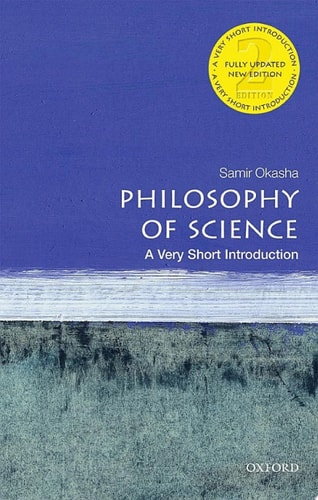
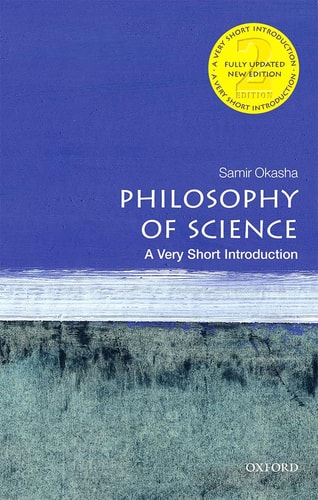
Philosophy of Science: A Very Short Introduction
0
0
As an Amazon Associate and affiliate partner, Menrva Books earns from qualifying purchases. Learn more
Author Description
How much faith should we place in what scientists tell us? Is it possible for scientific knowledge to be fully 'objective'? What, really, can be defined as science? In the second edition of this Very Short Introduction, Samir Okasha explores the main themes and theories of contemporary philosophy of science, and investigates fascinating, challenging questions such as these. Starting at the very beginning, with a concise overview of the history of science, Okasha examines the nature of fundamental practices such as reasoning, causation, and explanation. Looking at scientific revolutions and the issue of scientific change, he asks whether there is a discernible pattern to the way scientific ideas change over time, and discusses realist versus anti-realist attitudes towards science. He finishes by considering science today, and the social and ethical philosophical questions surrounding modern science. ABOUT THE SERIES: The Very Short Introductions series from Oxford University Press contains hundreds of titles in almost every subject area. These pocket-sized books are the perfect way to get ahead in a new subject quickly. Our expert authors combine facts, analysis, perspective, new ideas, and enthusiasm to make interesting and challenging topics highly readable.
Menrva's Summary
THE THESIS
This book investigates the fundamental nature of scientific inquiry, questioning the limits of objectivity, the validity of scientific reasoning, and the definition of science itself. Samir Okasha, a professor of philosophy of science, utilizes historical context and contemporary analytical frameworks to evaluate how scientific knowledge is constructed and justified. The text provides a systematic examination of core philosophical problems, including causation, explanation, and the evolution of scientific paradigms.
THE SCOPE MAP
What You Will Find
- Historical overview of scientific development and major revolutions
- Analysis of scientific reasoning, induction, and falsification
- Comparison of scientific realism versus anti-realism
- Discussion on the social and ethical implications of modern scientific practice
Scope Limits
- Does not provide an exhaustive history of specific scientific discoveries
- Does not offer technical mathematical proofs for scientific theories
THE AUTHORITY PERSPECTIVE
Experts and educators frequently cite this work as a foundational, accessible entry point for students and laypeople interested in the philosophy of science. Readers often note the clarity and conciseness of the prose, which manages to distill complex epistemological debates into a highly readable format.
Page Count:
160
Publication Date:
2016-01-01
Publisher:
OUP Oxford
ISBN-10:
0191062790
ISBN-13:
9780191062797
Non-Fiction
Philosophy
Science
Philosophy of
Epistemology
Community Tags
Other Editions(4)
Similar Books