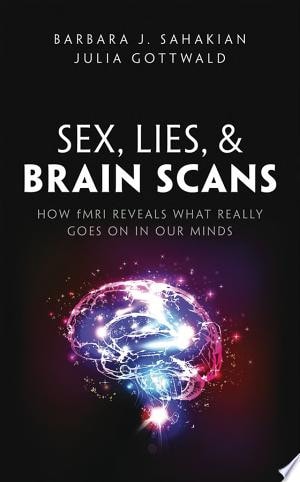
Sex, Lies, and Brain Scans
0
0
As an Amazon Associate and affiliate partner, Menrva Books earns from qualifying purchases. Learn more
Author Description
The Recent Explosion Of Neuroscience Techniques Has Proved To Be Game Changing In Terms Of Understanding The Healthy Brain, And In The Development Of Neuropsychiatric Treatments. One Of The Key Techniques Available To Us Is Functional Magnetic Resonance Imaging (fmri), Which Allows Us To Examine The Human Brain Non-invasively, And Observe Brain Activity In Real Time. Through Fmri, We Are Beginning To Build A Deeper Understanding Of Our Thoughts, Motivations, And Behaviours. Recent Reports That Some Patients Who Have All Indications Of Being In A Persistent Vegetative State Actually Show Conscious Awareness, And Were Able To Communicate With Researchers, Demonstrate Perhaps The Most Remarkable And Dramatic Use Of Fmri. But This Is Just The Most Striking Of A Number Of Areas In Which Fmri Is Being Used To 'read Minds', Albeit In A Very Limited Way. As Neuroscientists Unravel The Regions Of The Brain Involved In Reward And Motivation, And In Romantic Love, We Are Likely To Develop The Capacity To Influence Responses Such As Love Using Drugs. Fmri Studies Have Also Been Used To Indicate That Many People Who Would Not Regard Themselves As Racist Show A Racial Bias In Their Emotional Responses To Faces Of Another Racial Group. Meanwhile, The Reliability Of Fmri As A Lie Detector In Murder Cases Is Being Debated - What If The Individual Simply Believes, Falsely, That He Or She Committed A Murder? Sex, Lies, And Brain Scans Takes Readers Beyond The Media Headlines. Barbara J. Sahakian And Julia Gottwald Consider What The Technique Of Fmri Entails, And What Information It Can Give Us, Showing Which Applications Are Possible Today, And Which Ones Are Science Fiction. They Also Consider The Important Ethical Questions These Techniques Raise. Should Individuals Applying For Jobs As Teachers Or Judges Be Screened For Unconscious Racial Bias? What If The Manipulation Of Love Using 'love Potions' Was Misused For Economic Or Military Ends? How Far Will We Allow Neuroscience To Go?
Menrva's Summary
THE THESIS
This book investigates the scientific capabilities and ethical implications of functional magnetic resonance imaging (fMRI) in contemporary society. Barbara J. Sahakian, a professor of clinical neuropsychology, and Julia Gottwald, a researcher in the field, utilize current neuroscientific data and case studies to evaluate how brain imaging technology influences our understanding of human behavior, consciousness, and moral decision-making. The authors present a framework for distinguishing between established clinical applications and speculative, potentially problematic uses of neuroimaging.
THE SCOPE MAP
What You Will Find
- Technical explanations of fMRI and its role in observing real-time brain activity
- Analysis of neuroscientific applications in detecting bias, deception, and consciousness
- Discussion of pharmacological interventions in emotional states like romantic love
- Ethical frameworks for the use of brain scans in legal, professional, and personal contexts
Scope Limits
- Does not provide a comprehensive history of all neuroimaging technologies
- Does not offer a definitive legal or policy guide for the regulation of neurotechnology
THE AUTHORITY PERSPECTIVE
Experts and readers frequently note that the text provides a balanced, accessible overview of complex neuroscientific topics for a general audience. The authors are praised for their ability to translate technical research into clear ethical inquiries regarding the future of brain science.
Page Count:
192
Publication Date:
2016-01-01
Publisher:
Oxford University Press
ISBN-10:
0191067172
ISBN-13:
9780191067174
Non-Fiction
Psychology
Science
Ethics
Neuroscience
Community Tags
Similar Books